How do hydraulic cylinders fail, and what can you do before a minor leak becomes expensive downtime? At Jiaheng, we recommend a simple process: isolate the machine, identify the failure mode, check oil and alignment, measure the damaged components, and then choose the correct repair or Replacement Hydraulic Cylinders. By following the steps below, maintenance teams can diagnose most cylinder problems efficiently, reduce repeat failures, and return equipment to service with a controlled, documented solution.
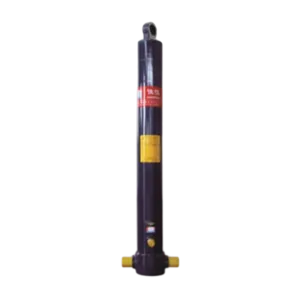
How Do Hydraulic Cylinders Fail?
Hydraulic cylinders usually fail because contamination, excessive pressure, side loading, poor installation, corrosion, or seal degradation creates damage faster than the cylinder can tolerate. A cylinder may continue working for a short period after the first warning sign, but operating it in that condition can damage the piston rod, barrel, piston, gland, and hydraulic circuit.
The most common failure symptoms include:
- External oil leakage around the rod seal or gland
- Internal bypass caused by worn piston seals
- Slow or irregular cylinder movement
- Rod scoring, bending, or corrosion
- Cylinder drift when the control valve is neutral
- Excessive noise, vibration, or heat
- Failure to achieve the required force
- Premature wear after a new cylinder is installed
A reliable diagnosis should identify not only the damaged component but also the root cause. Replacing a seal without correcting misalignment or contaminated hydraulic oil often leads to another failure within weeks.
The Main Failure Modes of Hydraulic Cylinders
1. External Hydraulic Oil Leakage
External leakage is one of the easiest problems to detect. Oil may appear at the rod seal, wiper seal, gland, port connection, or barrel-end joint.
Typical causes include:
- Worn or chemically incompatible rod seals
- Scratched or pitted piston rods
- Excessive rod runout
- Incorrect seal installation
- High hydraulic temperature
- Excessive pressure spikes
- Loose fittings or damaged O-rings
A small film of oil should not be confused with active leakage. Wipe the area clean, cycle the cylinder several times, and inspect it again. If oil reappears quickly, the seal or rod surface requires further evaluation.
For accurate inspection, I recommend measuring rod diameter and runout rather than relying only on visual examination. In precision applications, dimensional records should be taken to 0.01 mm where the equipment and measuring tools allow.
2. Internal Leakage and Cylinder Drift
Internal leakage occurs when hydraulic fluid bypasses the piston seal inside the cylinder. The cylinder may drift under load, move slowly, or fail to hold position even though there is no visible external leak.
Common causes include:
- Damaged piston seals
- Worn piston or barrel bore
- Incorrect seal clearance
- Contaminated hydraulic oil
- Excessive internal pressure
- Damaged piston retaining hardware
To check for internal leakage, isolate the cylinder from the control circuit when safe to do so, apply a controlled load, and monitor movement. If the rod retracts or extends without a command, the cylinder, control valve, counterbalance valve, or load-holding circuit may be responsible.
This test must be performed according to the machine manufacturer’s safety procedure. A suspended load can move unexpectedly if the cylinder is disconnected or hydraulic pressure is released.
3. Bent, Scored, or Corroded Piston Rods
The piston rod is exposed to impact, dirt, moisture, and side loading. A bent rod can damage the rod seal and gland, while a scored rod creates a continuous path for oil leakage.
Rod damage is often caused by:
- Incorrect mounting or pin alignment
- Side load from worn bushings
- Uneven mechanical loads
- Impact from rocks or tools
- Insufficient rod protection
- Corrosive working environments
- Inadequate chrome plating or surface finish
A bent rod should not be straightened automatically. Cold straightening can alter material properties and create hidden stress. For critical equipment, compare the rod against the manufacturer’s straightness tolerance and inspect it over its full stroke.
If the rod surface is deeply pitted or scored, replacing only the seal is unlikely to solve the problem. Depending on the damage, the correct solution may be rod re-chroming, rod replacement, gland replacement, or a complete cylinder replacement.
4. Barrel, Piston, and Gland Wear
A worn barrel bore reduces sealing performance and can create internal bypass. A damaged piston may allow the piston to tilt, causing uneven wear and seal extrusion. The gland can also wear when the rod is exposed to side load or contamination.
During an overhaul, inspect:
- Barrel bore diameter and surface finish
- Piston outside diameter
- Piston seal groove dimensions
- Guide ring condition
- Rod guide and bushing clearance
- Gland threads and retaining mechanisms
- Port threads and sealing faces
The bore should be checked along multiple positions and at different angles. Measuring only one location can miss taper, ovality, or localized scoring.
5. Pressure, Temperature, and Hydraulic Fluid Problems
Hydraulic cylinders are designed for defined pressure, speed, temperature, and fluid conditions. Operating outside those parameters accelerates failure.
Frequent causes include:
- Pressure exceeding the cylinder’s rated working pressure
- Hydraulic shock from rapid valve closure
- Oil temperature above the seal rating
- Incorrect hydraulic fluid viscosity
- Water contamination
- Air entrainment
- Particulate contamination
Hydraulic cleanliness should be monitored using ISO 4406 cleanliness codes where appropriate. Fluid samples can identify particles, water, oxidation products, and abnormal wear metals before they cause severe cylinder damage.
Temperature is equally important. Excessive heat hardens elastomeric seals and reduces lubricant viscosity. If a new cylinder fails after installation, check the relief valve setting, pump pressure, cycle frequency, oil cooler, and fluid level instead of assuming that the cylinder was defective.
A Step-by-Step Hydraulic Cylinder Failure Diagnosis
Step 1: Make the Machine Safe
Before inspecting a failed cylinder:
- Park the machine on stable ground.
- Lower or mechanically support the load.
- Shut down the power unit.
- Relieve stored hydraulic pressure.
- Lock out and tag out the equipment.
- Clean the cylinder and surrounding area.
Never place hands near a suspected pinhole leak. High-pressure hydraulic fluid can penetrate skin and cause a serious medical emergency.
Step 2: Record the Failure Symptoms
Create a short failure report containing:
- Machine model and operating hours
- Cylinder identification and dimensions
- Load and pressure conditions
- Oil temperature
- Failure location
- Time between installation and failure
- Recent maintenance or component changes
- Photographs before disassembly
This information helps distinguish a manufacturing issue from a system-level problem. It also allows Jiaheng engineers to recommend the correct Replacement Hydraulic Cylinders rather than supplying a visually similar but technically unsuitable product.
Step 3: Check the Hydraulic Circuit
Inspect the hydraulic system before removing the cylinder. Check:
- Relief valve pressure
- Flow-control settings
- Counterbalance and load-holding valves
- Hose routing and restrictions
- Filtration condition
- Oil level and cleanliness
- Air in the hydraulic circuit
- Cylinder mounting alignment
If the circuit generates pressure spikes or side loading, even high-quality Replacement Hydraulic Cylinders can fail prematurely.
Step 4: Inspect the Cylinder Externally
Look for:
- Oil around the rod seal
- Rod scoring or rust
- Dents in the barrel
- Cracks around welds
- Loose ports
- Damaged mounting eyes
- Bent pins
- Paint loss caused by mechanical contact
Use a straightedge, dial indicator, micrometer, and calibrated pressure gauge when necessary. Measurement is more reliable than visual estimation.
Step 5: Disassemble and Measure
After removing the cylinder, disassemble it in a clean workshop. Mark component orientation and protect precision surfaces.
Measure and document:
| Component |
Inspection point |
Typical concern |
| Piston rod |
Diameter, straightness, surface finish |
Scoring, bending, corrosion |
| Barrel |
Bore size, taper, ovality |
Wear and internal bypass |
| Piston |
Diameter and seal grooves |
Tilt and seal extrusion |
| Gland |
Guide clearance and threads |
Rod instability |
| Seals |
Hardness, cuts, swelling |
Chemical or thermal damage |
| Ports |
Threads and sealing faces |
Leakage and cross-threading |
For dimensional control, use calibrated instruments and record results to the required resolution. In precision manufacturing, a 0.01 mm measurement resolution can help identify wear that would otherwise be missed.
Step 6: Select Repair or Replacement
A repair may be suitable when the barrel, rod, and mounting structure remain within specification. Replacement is generally more practical when:
- The barrel is deeply scored or distorted.
- The rod is severely bent or corroded.
- The cylinder has repeated failures.
- Spare parts are unavailable.
- Repair lead time exceeds production requirements.
- The original cylinder is incorrectly sized.
- The cost of rebuilding approaches the cost of a new unit.
When selecting Replacement Hydraulic Cylinders, match more than bore and stroke. Confirm:
- Bore and rod diameter
- Stroke length
- Retracted and extended dimensions
- Mounting style
- Port size and location
- Working and test pressure
- Cushioning requirements
- Seal material
- Operating temperature
- Surface treatment
- Duty cycle and speed
Jiaheng can use the original drawing, sample cylinder, photographs, or application data to support cylinder identification and customization.
Testing and Quality Controls for Replacement Hydraulic Cylinders
A replacement cylinder should be tested before shipment and, where practical, after installation. Relevant standards may include:
- ISO 10100 for hydraulic fluid power cylinder acceptance tests
- ISO 6020/2 for compact hydraulic cylinders
- ISO 6022 for heavy-duty hydraulic cylinders
- ISO 4406 for hydraulic fluid contamination classification
- ASTM B117 for evaluating corrosion resistance in applicable coating tests
- Applicable DIN dimensional or mounting requirements
The exact standard depends on the cylinder design and application. A professional inspection plan may include:
- Dimensional inspection
- Visual and surface inspection
- No-load cycling
- Pressure holding test
- Leakage inspection
- Cushioning verification
- Weld inspection where required
- Cleanliness confirmation
- Packaging and corrosion protection inspection
For quality-sensitive projects, buyers should request a documented inspection report, serial-number traceability, test pressure, seal specification, and material or coating information. A supplier claiming 100% inspection should also be able to explain which characteristics are inspected and how results are recorded.
Common Challenges and How to Overcome Them
The Original Cylinder Has No Nameplate
When the nameplate is missing, measure the cylinder completely and photograph every mounting point. Record the bore, rod, stroke, closed length, extended length, ports, and mounting style.
Avoid ordering based only on outside diameter. Two cylinders can appear similar but have different internal dimensions, pressure ratings, or installation geometry.
The Failure Appears to Be Only a Seal Problem
A seal may be the visible failure point, not the original cause. Before installing a seal kit, inspect the rod, barrel, alignment, pressure, and oil cleanliness.
If a new seal fails quickly, examine the installation tools and seal orientation. Sharp edges, incorrect lubrication, and twisting during installation can damage seals before the cylinder returns to service.
The Cylinder Works but Moves Unevenly
Erratic motion can originate from air in the circuit, contaminated oil, a restricted hose, a sticking valve, uneven load distribution, or damaged internal components.
Bleed air according to the equipment manual, verify flow, inspect the control valve, and check cylinder alignment before replacing the complete unit.
The Replacement Cylinder Does Not Fit
Fitment problems are usually caused by incomplete measurements. Confirm retracted length, pin diameter, mounting width, port orientation, and rod-end thread before production.
A supplier should provide a dimensional drawing for approval. This simple step can prevent rework, installation delays, and unnecessary freight costs.
How Businesses Can Reduce Hydraulic Cylinder Downtime
A proactive maintenance program is more effective than waiting for visible leakage. We recommend that equipment owners:
- Inspect rods and seals during every scheduled service.
- Test hydraulic oil and monitor ISO 4406 cleanliness levels.
- Check mounting pins, bushings, and alignment.
- Verify relief valve settings at planned intervals.
- Keep critical seal kits and Replacement Hydraulic Cylinders in stock.
- Record operating hours and failure history.
- Use protective rod wipers in dusty or wet environments.
- Train technicians in pressure-release and contamination-control procedures.
For urgent projects, establish a clear supplier communication process. A practical service target may include technical confirmation within 24 hours, drawing approval before production, and a defined inspection report before shipment. These controls help maintenance teams make decisions faster while maintaining engineering accuracy.
A Practical Jiaheng Checklist Before Ordering
Before contacting Jiaheng for a repair or replacement, prepare:
- Cylinder photographs from all sides.
- Nameplate information, if available.
- Bore, rod, and stroke dimensions.
- Retracted and extended lengths.
- Mounting and port details.
- Working pressure and cycle speed.
- Hydraulic fluid type and temperature.
- Failure symptoms and operating environment.
- Required quantity and delivery date.
- Drawing or quality documentation requirements.
With this information, Jiaheng can evaluate whether repair, remanufacturing, or new Replacement Hydraulic Cylinders provide the best technical and commercial result.
Final Review: Prevent the Next Hydraulic Cylinder Failure with Jiaheng
So, how do hydraulic cylinders fail? They fail through a combination of seal wear, contamination, pressure spikes, side loading, corrosion, poor installation, and incorrect application. The most effective response is to make the machine safe, document the symptoms, inspect the complete hydraulic circuit, measure damaged components, and select a correctly specified repair or replacement.
When a cylinder is beyond economical repair, Jiaheng helps businesses identify dependable Replacement Hydraulic Cylinders based on dimensions, pressure, mounting, seal materials, and operating conditions—not appearance alone. Start by collecting the checklist data, request a technical drawing, confirm the test requirements, and approve the inspection plan. These immediate steps can reduce downtime, prevent repeat failures, and improve the service life of your hydraulic equipment.