Oil Cylinder Of The Pump Truck Boom is the hydraulic actuator that raises, extends, folds, and stabilizes the concrete pump truck boom. Under high loads, it converts pressurized hydraulic oil into controlled linear force while resisting bending, shock, vibration, and sudden pressure changes.
This guide explains the working principle, load calculation, inspection process, failure diagnosis, purchasing requirements, and maintenance practices that buyers, fleet managers, service technicians, and equipment manufacturers need to evaluate a boom cylinder safely. Jiaheng supplies hydraulic cylinders for demanding mobile equipment applications, including pump truck boom systems.
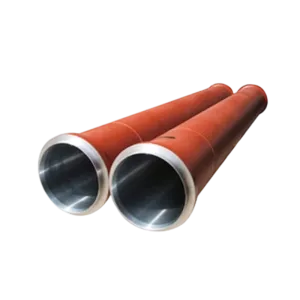
How a Pump Truck Boom Cylinder Carries a High Load
Hydraulic pressure becomes cylinder pushing force
A pump truck boom cylinder works by directing pressurized hydraulic oil into one side of a piston. The oil pressure acts on the piston area and creates a linear force. This force moves the piston rod, and the rod transfers motion through pins and linkages to the boom section.
The basic extension force is calculated as follows:
Extension force = hydraulic pressure x piston area
The retraction force is lower because the piston rod occupies part of the piston area:
Retraction force = hydraulic pressure x piston area minus rod area
For example, a cylinder with a 160 mm bore operating at 250 bar has a theoretical extension force of approximately 502,600 N before friction and efficiency losses. The actual available force is lower because of seal friction, pressure losses, temperature, alignment, and mechanical leverage.
The boom geometry can multiply or reduce cylinder load
The cylinder does not carry the entire boom load in a simple vertical direction. The actual rod force depends on the boom angle, cylinder mounting points, boom length, concrete hose weight, residual concrete, wind, and acceleration during movement.
The highest cylinder load can occur when:
- The boom is close to a horizontal position.
- The boom is fully extended.
- The delivery hose contains heavy or hardened concrete.
- The boom starts or stops suddenly.
- The truck is parked on an uneven or unstable surface.
- The cylinder pin or mounting bracket is misaligned.
- The hydraulic relief valve is set above the approved pressure.
Hydraulic valves control movement and prevent sudden descent
Directional control valves send oil to the piston side or rod side. Counterbalance valves, pilot-operated check valves, and load-holding valves help prevent uncontrolled boom movement if a hose fails or the control lever is released.
These valves also help control lowering speed. A properly sized cylinder can still be unsafe if the valve block cannot manage the load. The cylinder, hoses, valves, pins, brackets, and electronic control system must therefore be evaluated as one load-bearing system.
What Happens Inside the Cylinder During High-Load Operation
The piston and rod transfer the main load
The piston divides the cylinder into two oil chambers. High-pressure oil enters one chamber while oil leaves the other chamber through the return circuit. The piston seals prevent internal leakage, and the rod seal prevents oil from escaping around the polished rod.
The piston rod is exposed to several types of stress:
- Axial compression during boom lifting.
- Axial tension during certain retraction movements.
- Bending caused by side loading or poor alignment.
- Impact loading caused by sudden starts and stops.
- Fatigue caused by repeated operating cycles.
- Surface wear caused by contamination or damaged wipers.
The cylinder barrel contains hydraulic pressure
The cylinder barrel must withstand internal pressure without permanent expansion, cracking, or deformation. The barrel material, wall thickness, bore accuracy, honing quality, and weld quality directly affect service life.
A high-quality barrel normally includes:
- Controlled material chemistry and mechanical strength.
- Accurate internal diameter tolerance.
- Honed surface suitable for seal running.
- Reliable weld penetration at the head and bottom connections.
- Pressure testing after assembly.
- Protection against internal rust and contamination.
Seals maintain pressure and exclude contamination
Rod seals, piston seals, guide rings, wipers, static seals, and backup rings work together to control oil and protect the cylinder. High loads increase pressure at the sealing edges, while high cycle rates increase heat and friction.
Seal selection should consider:
- Maximum and continuous operating pressure.
- Oil type and additive package.
- Operating temperature range.
- Rod speed and cycle frequency.
- Dust, water, concrete slurry, and road contamination.
- Storage conditions and expected service life.
How to Check Boom Cylinder Load and Specification Requirements
First step: collect the equipment operating data
Before selecting or replacing a boom cylinder, record the equipment information rather than relying on visual similarity. The correct replacement must match both physical dimensions and hydraulic performance.
- Pump truck manufacturer and model.
- Boom section number and cylinder position.
- Maximum system pressure.
- Normal operating pressure.
- Maximum flow rate.
- Required stroke length.
- Closed length and extended length.
- Bore diameter and rod diameter.
- Mounting pin diameter and pin center distance.
- Port size, port location, and port thread type.
- Mounting angle and allowable articulation.
- Operating temperature and hydraulic oil specification.
Second step: calculate the required force
Calculate theoretical cylinder force using the piston area and approved hydraulic pressure. Then apply an engineering safety margin for friction, pressure loss, dynamic impact, and changing boom geometry.
Use the following process:
- Convert the bore diameter into piston area.
- Multiply piston area by the approved maximum working pressure.
- Calculate rod-side retraction force separately.
- Determine the worst boom angle and linkage position.
- Estimate the external moment caused by the boom, hose, and concrete.
- Convert the moment into the required cylinder force based on the mounting geometry.
- Compare the calculated force with the cylinder rated force.
- Confirm that the pins, brackets, valves, and hoses have equal or greater capacity.
Third step: verify rod stability and buckling resistance
A long rod under compression can bend or buckle even when its hydraulic force rating appears adequate. Buckling risk increases when the rod is slender, unsupported, extended for a long distance, or subjected to side loading.
Check the following items:
- Unsupported rod length at maximum extension.
- Rod diameter and material yield strength.
- Mounting support and pin alignment.
- Effective buckling length based on the mounting condition.
- Side load caused by worn bushings or bent brackets.
- Clearance between the rod and surrounding components.
Fourth step: confirm pressure and flow compatibility
A cylinder designed for a lower pressure system may fail prematurely when installed on a higher-pressure pump truck. Excessive flow can also create high rod speed, impact at the end of stroke, heat generation, and seal damage.
Confirm that:
- The rated working pressure is higher than the machine pressure.
- The proof test pressure meets the equipment requirement.
- The port size does not restrict required flow.
- The cylinder speed is suitable for controlled boom movement.
- The end-of-stroke cushioning is adequate.
- The relief valve is correctly adjusted and sealed.
Step-by-Step Procedure for Inspecting a Pump Truck Boom Cylinder
Required tools and protective equipment
Use the following tools before starting a cylinder inspection or removal:
- Manufacturer service manual and hydraulic schematic.
- Calibrated pressure gauge with the correct pressure range.
- Flow meter, when hydraulic flow verification is required.
- Digital caliper, steel ruler, and tape measure.
- Torque wrench and approved hydraulic fitting tools.
- Clean drain pan and oil sampling container.
- Lint-free cleaning cloths.
- Flashlight and inspection mirror.
- Dial indicator for checking pin and bracket movement.
- Soft-faced hammer and approved pin removal tools.
- Plugging caps for hydraulic hoses and cylinder ports.
- Certified lifting equipment and mechanical boom supports.
- Safety glasses, gloves, safety footwear, and protective clothing.
First step: park and isolate the pump truck
- Park the truck on firm, level ground away from traffic and overhead obstructions.
- Set the parking brake and place wheel chocks under the wheels.
- Fully retract or position the boom according to the service manual.
- Install mechanical supports that can carry the boom load.
- Stop the engine and remove the ignition key.
- Apply the required lockout and tagout procedure.
- Keep unauthorized personnel outside the work area.
Never rely on hydraulic pressure alone to support a raised boom. A leaking valve or damaged hose can allow the boom to descend without warning.
Second step: release hydraulic pressure safely
- Move the control levers through all positions only when the manufacturer permits this procedure.
- Verify that the pump is stopped.
- Read the pressure gauge and confirm that pressure has fallen to the specified safe level.
- Loosen fittings slowly and only after placing a drain pan underneath.
- Cap every disconnected hose and port immediately.
- Clean spilled oil to prevent slips, fire risk, and environmental contamination.
Do not search for a hydraulic leak with your hand. High-pressure oil can penetrate skin and cause a medical emergency. Use cardboard or a leak detection sheet while standing clear of the suspected area.
Third step: perform an external cylinder inspection
- Clean dirt and concrete residue from the barrel, rod, ports, and mounting areas.
- Inspect the rod for scratches, pitting, corrosion, dents, and chrome peeling.
- Check for oil around the rod seal and wiper.
- Inspect the barrel for dents, cracks, bulges, and damaged welds.
- Check the piston rod for bending by measuring runout where permitted.
- Inspect mounting pins, bushings, retaining plates, and grease points.
- Look for uneven wear that indicates side loading or misalignment.
- Check hose routing for rubbing, twisting, sharp bends, and inadequate slack.
Fourth step: check mounting alignment
Misalignment is one of the most common causes of premature boom cylinder failure. The rod should move along its intended axis without forcing the piston, guide, or rod seal against the barrel.
- Measure the distance between mounting pin centers on the cylinder and the boom structure.
- Compare left and right bracket positions when the design uses paired cylinders.
- Inspect bushing wear and oval holes.
- Check whether pins rotate freely without excessive clearance.
- Verify that the cylinder is not being used as a structural stop outside its design function.
- Replace damaged bushings and repair distorted brackets before installing a new cylinder.
Fifth step: test the cylinder under controlled conditions
- Reconnect the cylinder and confirm that all fittings are tightened to specification.
- Bleed trapped air according to the service manual.
- Run the hydraulic system at low speed and low load first.
- Extend and retract the cylinder several times without reaching an abrupt mechanical stop.
- Check for external leakage, unusual noise, vibration, and jerky movement.
- Raise the load gradually while monitoring pressure.
- Verify that the boom holds position after the control is released.
- Compare cylinder movement and pressure with the machine specification.
- Stop the test immediately if the rod bends, the pressure spikes, or the boom drifts unexpectedly.
Sixth step: document the inspection result
Record the cylinder serial number, operating pressure, measured dimensions, leakage condition, rod condition, pin condition, oil temperature, and test observations. Photographs of damaged areas help suppliers identify the correct repair kit or replacement model.
How to Diagnose Common High-Load Boom Cylinder Problems
External oil leakage around the rod
External leakage usually indicates a worn rod seal, damaged wiper, scratched rod, excessive rod side load, loose gland, or contamination inside the seal housing.
Recommended diagnostic sequence:
- Clean the rod and seal area completely.
- Cycle the cylinder at low speed.
- Identify whether oil appears from the rod seal, port, weld, or gland joint.
- Inspect the rod surface for damage.
- Check alignment and guide wear.
- Replace seals only after confirming that the rod and guide are serviceable.
Internal leakage and boom drift
Internal leakage allows oil to pass across the piston seal. The boom may slowly move when the control is neutral, and the cylinder may fail to hold a load.
Possible causes include:
- Worn or cut piston seals.
- Incorrect seal installation.
- Damaged piston or barrel surface.
- Excessive cylinder temperature.
- Contaminated hydraulic oil.
- Leaking counterbalance or check valve.
To isolate the cause, test the cylinder and valve separately according to the hydraulic schematic. Replacing the cylinder without checking the holding valve may not solve boom drift.
Jerky or slow cylinder movement
Jerky movement can result from trapped air, low oil level, restricted filters, contaminated oil, incorrect flow adjustment, worn piston seals, or excessive side loading.
- Check the hydraulic oil level and oil condition.
- Inspect the suction line for air entry.
- Replace clogged filters according to the maintenance schedule.
- Bleed air from the cylinder and circuit.
- Measure flow and pressure at the cylinder circuit.
- Inspect the rod, pins, bushings, and mounting brackets.
- Check for thermal damage to seals and oil.
Rod bending or barrel deformation
A bent rod or deformed barrel is a serious structural failure. It may be caused by side loading, excessive compression, impact, a bent boom section, an incorrect mounting pin, or operation beyond the approved load envelope.
Do not straighten a high-strength piston rod by uncontrolled heating or hammering. Replace or professionally repair the damaged component after identifying the original load cause.
What Purchasing Teams Should Check Before Ordering a Cylinder
Specify complete technical dimensions
A purchasing request should contain more than a photograph. Send a dimensional drawing, nameplate data, or the following information to the cylinder manufacturer:
- Application and pump truck model.
- Cylinder function and boom section location.
- Bore and rod diameter.
- Stroke and retracted length.
- Mounting style and pin center dimensions.
- Pin diameter and bushing dimensions.
- Port type and port orientation.
- Working pressure and test pressure.
- Required cylinder speed and hydraulic flow.
- Operating temperature and oil type.
- Surface treatment requirements for the rod.
- Seal material and replacement kit requirements.
Evaluate quality and traceability
Purchasers often want to reduce downtime and avoid a second failure. Ask the supplier for evidence that the cylinder is built for repeated high-load operation.
Useful supplier information includes:
- Material certificates for the barrel and piston rod.
- Welding procedure and weld inspection records.
- Bore honing and rod surface finish data.
- Seal brand, material, and temperature range.
- Assembly cleanliness standard.
- Pressure test results for each cylinder.
- Dimensional inspection report.
- Serial number and production traceability.
- Warranty terms and exclusions.
- Repair kit and spare parts availability.
Compare suppliers by total operating cost
The lowest purchase price may not be the lowest total cost. Compare the expected service life, installation time, downtime risk, seal availability, technical support, and shipping reliability.
| Evaluation item |
Why it matters |
| Correct dimensions |
Prevents installation delays and modification work. |
| Pressure rating |
Reduces the risk of leakage, deformation, and sudden failure. |
| Rod surface quality |
Protects rod seals and improves service life. |
| Seal quality |
Controls leakage under pressure and temperature changes. |
| Pressure testing |
Confirms assembly integrity before shipment. |
| Technical support |
Helps identify installation and system problems. |
| Spare parts availability |
Reduces future repair downtime. |
Questions to ask a hydraulic cylinder supplier
- Can the cylinder be manufactured according to the original drawing?
- What is the maximum continuous working pressure?
- What proof pressure and test duration are used?
- How is rod straightness verified?
- Which seal materials are used?
- Can the port position and mounting dimensions be customized?
- Is a repair kit available for future maintenance?
- What inspection documents are supplied with the cylinder?
- What is the expected lead time for repeat orders?
- How are cylinders packaged to prevent rod and port damage during transport?
Maintenance Practices That Extend Cylinder Service Life
Keep the hydraulic system clean
Contamination is a major cause of seal wear and internal leakage. Dirt entering through a damaged wiper can score the rod and barrel. Water can cause corrosion, additive depletion, and seal deterioration.
- Use clean containers and tools when servicing the hydraulic system.
- Replace filters at the recommended interval.
- Keep filler caps and breather filters clean.
- Use only approved hydraulic oil.
- Inspect oil for water, metal particles, foam, and discoloration.
- Flush the system after a major component failure.
Lubricate pins and bushings correctly
Dry or worn pins change the cylinder mounting geometry and create side loads. Grease each point according to the equipment schedule, but do not use excessive grease to hide damaged bushings or elongated holes.
Protect the piston rod during storage
Store replacement cylinders in a dry, covered location. Keep the rod retracted when possible, protect ports with clean caps, and prevent contact with concrete dust, salt, water, and welding sparks.
Inspect before every operating shift
A short daily check can identify problems before they become high-load failures.
- Look for fresh oil around the rod seal and ports.
- Check for rod scratches, rust, and dents.
- Inspect pins, retainers, and bushings.
- Check hose routing and protective sleeves.
- Confirm that the boom support and safety devices are secure.
- Listen for abnormal knocking or hydraulic noise.
- Stop operation if the boom drifts or moves unevenly.
Common Mistakes to Avoid When Servicing or Buying a Boom Cylinder
Mistake 1: selecting by appearance only
Two cylinders may look similar but have different bore sizes, stroke lengths, pressure ratings, port positions, seal materials, or mounting geometry. Always verify dimensions and hydraulic specifications.
Mistake 2: operating above the approved pressure
Increasing relief valve pressure to obtain more lifting force can overload the barrel, rod, welds, pins, and boom structure. Use the manufacturer-approved pressure and investigate insufficient force through the complete hydraulic system.
Mistake 3: ignoring side loading
A cylinder is designed primarily for axial force. Bent brackets, worn bushings, incorrect pins, or an uneven boom can create side loads that rapidly damage the rod, guide, and seals.
Mistake 4: replacing seals without checking the rod
New seals will fail quickly when installed on a scratched, pitted, bent, or incorrectly plated rod. Inspect and measure the rod before ordering a seal kit.
Mistake 5: removing a cylinder without mechanical support
When a mounting pin is removed, the boom can shift or fall. Install certified supports and release hydraulic pressure before disconnecting the cylinder.
Mistake 6: using dirty tools and open ports
Small particles can damage piston seals and valves. Clean the work area, cap all ports, and use lint-free materials during assembly.
Mistake 7: failing to bleed air after installation
Air causes spongy movement, noise, heat, and unstable load holding. Bleed the circuit using the correct low-speed procedure before applying full load.
Mistake 8: treating boom drift as only a cylinder problem
Drift can come from the cylinder, counterbalance valve, pilot check valve, directional valve, hose, or trapped air. Test the complete circuit before approving a replacement.
How Jiaheng Can Support a Reliable Pump Truck Boom Cylinder Program
Use application-specific engineering
Jiaheng can evaluate the cylinder according to pump truck model, mounting dimensions, load conditions, stroke, pressure, speed, and operating environment. This approach helps prevent a basic dimensional match from becoming a performance mismatch.
Request a complete quotation package
For an accurate quotation, provide the original cylinder drawing or nameplate photograph together with operating data. Include the required quantity, delivery location, inspection requirements, packaging needs, and spare seal kit requirements.
Confirm testing before shipment
For high-load boom applications, request dimensional inspection and hydraulic pressure testing documentation. Confirm that the product is protected against transport damage and that all ports are sealed before shipment.
Build a replacement and maintenance plan
Keep one approved spare cylinder or repair kit when downtime has a high business cost. Record cylinder serial numbers, operating cycles, leakage history, and replacement dates to identify recurring system problems.
Final Safety and Purchasing Checklist
Before operating the pump truck
- Confirm that the truck is on stable ground.
- Verify that outriggers and safety devices are correctly deployed.
- Inspect the boom cylinder rod, seals, pins, and hoses.
- Check for hydraulic leakage and abnormal movement.
- Confirm that the boom load and position are within the operating manual.
- Keep personnel away from suspended and moving boom sections.
Before ordering a replacement
- Match bore, rod, stroke, length, ports, and mounting dimensions.
- Confirm working pressure, proof pressure, and flow compatibility.
- Check rod finish, seal material, and corrosion protection.
- Request inspection and pressure test records.
- Verify technical support, warranty, and spare parts availability.
- Investigate the cause of the original failure before installation.
When correctly designed, installed, aligned, and maintained, Oil Cylinder Of The Pump Truck Boom can deliver stable movement and dependable load holding through thousands of operating cycles. A complete specification review, controlled inspection, and qualified supplier such as Jiaheng help reduce leakage, downtime, and high-load failure risk.