A Sanitation Machinery Hydraulic Cylinder is a hydraulic actuator that converts pressurized fluid into controlled linear movement. In sanitation equipment, it operates refuse-compactor plates, container-lifting arms, rear doors, tipping mechanisms, sweeper brushes, and other heavy-duty assemblies. By delivering high force in a compact design, it helps waste-management businesses increase payload efficiency, shorten operating cycles, reduce manual labor, and improve fleet productivity. Jiaheng provides hydraulic-cylinder solutions that can be configured for the pressure, stroke, mounting space, corrosion exposure, and duty cycle of sanitation machinery.
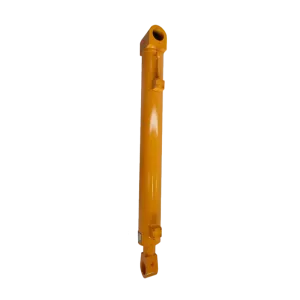
Why Hydraulic Cylinders Are Important in Sanitation Equipment
Modern sanitation machinery works in demanding conditions. Vehicles and stationary systems may be exposed to rainwater, wastewater, road salt, abrasive dust, organic waste, vibration, impact loads, and frequent start-stop operation. Mechanical linkages alone often cannot provide the force density, controllability, and flexibility required for these applications.
Hydraulic actuation solves this problem by transmitting power through hydraulic oil. A pump supplies pressurized fluid to the cylinder, while a directional control valve determines whether the piston rod extends or retracts. The resulting linear force can be calculated with the basic relationship:
Force = Hydraulic Pressure × Effective Piston Area
This design allows an engineer to select a cylinder according to load force, stroke length, operating pressure, retraction speed, installation envelope, and service life. It also makes it possible to synchronize several functions through proportional valves, flow controls, and electronic control systems.
Industry Background and Development
Hydraulic cylinders have been used in mobile machinery for decades because they offer a strong power-to-weight ratio and reliable force control. As municipal waste collection became more mechanized, sanitation vehicles adopted hydraulic systems for compaction, bin handling, tipping, and access-door operation.
Earlier sanitation equipment often relied on relatively simple single-stage or double-acting cylinders. Current machinery increasingly uses:
- Double-acting cylinders for controlled extension and retraction.
- Telescopic cylinders for high dump angles in limited installation spaces.
- Hard-chrome-plated or corrosion-resistant piston rods.
- Replaceable wear rings and seal kits for easier maintenance.
- Position sensors and pressure monitoring for automated control.
- Customized clevises, trunnions, flanges, and spherical bearings.
This evolution reflects the needs of high-utilization fleets. A refuse truck may perform hundreds of hydraulic cycles in a working day, so seal durability, rod alignment, contamination control, and maintenance access are as important as nominal cylinder force.
Key Hydraulic Cylinder Applications in Sanitation Machinery
1. Refuse Compactor Plates
Compactor cylinders drive the packer plate or sliding compaction mechanism inside a refuse collection body. They must generate high thrust while tolerating shock loads caused by unevenly distributed waste. A correctly sized Sanitation Machinery Hydraulic Cylinder helps maintain compaction force and supports consistent payload density.
Design considerations include:
- Required compaction force and operating pressure.
- Full extension and retraction stroke.
- Side-load risk caused by guide wear or uneven loading.
- Cycle frequency and thermal effects on hydraulic oil.
- Protection of the rod from abrasive waste and impact.
2. Rear Doors and Ejection Systems
Rear-door cylinders open and close the tailgate or hopper access panel. Ejector cylinders push compacted waste from the body during unloading. These systems require controlled movement because sudden door motion can damage hinges, seals, vehicle structures, or nearby equipment.
Flow-control valves, counterbalance valves, and properly selected cushioning are often required. The cushion design reduces end-of-stroke impact and helps prevent premature failure of the piston, gland, mounting brackets, and weldments.
3. Bin Lifters and Container Handling Arms
Bin-lifting equipment uses hydraulic cylinders to raise, tilt, and lower waste containers. These applications involve changing loads and shifting centers of gravity. The hydraulic circuit should therefore include load-holding protection, such as pilot-operated check valves or counterbalance valves, where a sudden hose failure could create a safety hazard.
For bin lifters, engineers should verify:
- Rated lifting capacity at the most unfavorable arm position.
- Required lifting angle and cylinder stroke.
- Mounting-pin strength and bearing clearance.
- Hydraulic hose routing through the entire movement range.
- Protection against pinch points and uncontrolled descent.
4. Tipping Bodies and Dumping Mechanisms
Telescopic hydraulic cylinders are widely used to raise refuse containers and transfer bodies. Their multiple stages provide long extension from a relatively short retracted length. However, telescopic designs require careful attention to stage sequencing, lateral stability, oil volume, rod surface treatment, and load distribution.
A Sanitation Machinery Hydraulic Cylinder for tipping service should be selected according to the complete tipping geometry rather than maximum payload alone. The highest cylinder force may occur at the beginning of the lifting cycle, when the body angle is low and the mechanical advantage is unfavorable.
5. Street Sweepers and Washing Systems
Street sweepers use hydraulic cylinders to lower side brushes, adjust brush pressure, position suction nozzles, and open maintenance covers. Water and cleaning chemicals create additional corrosion risks, particularly around the rod, gland, wiper, and mounting hardware.
For these systems, stainless-steel or treated components, protective rod coatings, suitable wiper seals, and drainage provisions can improve service reliability. The cylinder must also respond smoothly at low speed to prevent brush chatter and uneven contact with the road surface.
How to Specify a Jiaheng Hydraulic Cylinder
Choosing a cylinder by bore diameter alone is a common procurement error. Jiaheng or any qualified manufacturer should receive a complete application specification so the cylinder can be matched to the machine’s actual duty cycle.
| Specification item |
Information to provide |
Why it matters |
| Load and pressure |
Push force, pull force, working pressure, relief-valve setting |
Determines bore, rod diameter, and structural safety margin |
| Stroke and length |
Required stroke, retracted length, extension clearance |
Prevents interference and insufficient movement |
| Mounting |
Clevis, trunnion, flange, cross-tube, pin diameter |
Ensures correct load transfer and alignment |
| Environment |
Water, salt, chemicals, dust, temperature, waste exposure |
Guides rod coating, seal material, and corrosion protection |
| Duty cycle |
Cycles per hour, operating hours per day, impact loading |
Supports fatigue-life and thermal calculations |
| Quality requirements |
Dimensional tolerance, testing records, traceability, inspection plan |
Creates measurable acceptance criteria |
Recommended Engineering and Quality Checks
A professional hydraulic-cylinder purchasing process should cover design review, drawing approval, material verification, machining, assembly, pressure testing, cleanliness inspection, and final documentation. For critical dimensions, a buyer may specify measurement resolution or machining capability to 0.01 mm, provided that the tolerance is suitable for the actual component and manufacturing process.
Useful references include:
- ISO 10100: Hydraulic fluid power cylinders—acceptance tests.
- ISO 6020/2: Mounting dimensions for medium-duty hydraulic cylinders.
- ISO 6022: Mounting dimensions for heavy-duty hydraulic cylinders.
- ISO 4406: Hydraulic-fluid contamination coding and cleanliness classification.
- ASTM A276: Stainless-steel bars and shapes, where applicable to corrosion-resistant components.
- DIN specifications: Applicable dimensional, material, or mounting requirements when required by the machine design.
Testing should be defined in the purchase contract. Depending on the risk level, this may include a 100% pressure-hold test, leakage inspection, dimensional verification, surface-finish inspection, and functional cycling. A supplier service agreement may also specify a 24-hour response target for technical questions or field-failure escalation. These numbers are meaningful only when the test method, pressure, duration, acceptance limit, and reporting format are documented.
Common Misconceptions About Sanitation Hydraulic Cylinders
Misconception 1: A Larger Bore Always Provides a Better Cylinder
A larger bore increases theoretical pushing force, but it can also reduce speed, increase oil demand, add weight, and overload the machine structure. Cylinder sizing must consider pressure, force, velocity, available pump flow, buckling risk, and mounting geometry together.
Misconception 2: Hydraulic Oil Keeps the Cylinder Lubricated and Protected Automatically
Hydraulic oil supports internal lubrication, but it does not protect an exposed piston rod from salt, abrasive dust, or corrosive wastewater. The rod wiper, seal material, surface hardness, coating, and cleaning procedure are critical to service life.
Misconception 3: Any Seal Material Will Work in Waste-Handling Equipment
Seal compatibility depends on hydraulic-fluid type, temperature, pressure, speed, and chemical exposure. Nitrile, polyurethane, fluorocarbon, and other elastomers have different performance ranges. The selected seal package should be validated against the actual fluid and operating environment.
Misconception 4: Cylinder Failure Is Always a Manufacturing Defect
Premature failure can also result from side loading, misalignment, contaminated oil, excessive pressure, inadequate hose support, impact at end of stroke, incorrect installation, or insufficient maintenance. Root-cause analysis should inspect the complete hydraulic circuit and mechanical linkage.
Example: Improving a Refuse Truck Compaction System
Consider a refuse truck that experiences slow compaction, oil overheating, and recurring rod-seal leakage. Replacing the cylinder with a larger unit without investigating the system may increase the problem. A better corrective process is:
- Record operating pressure, cycle time, oil temperature, and leakage location.
- Check whether the compactor guide rails create side load on the cylinder.
- Inspect hydraulic-fluid cleanliness using an ISO 4406 sample.
- Verify rod alignment, pin wear, cushioning, and end-of-stroke impact.
- Review seal compatibility and rod-surface condition.
- Recalculate force and speed using the actual pump flow and relief pressure.
- Approve a revised Jiaheng cylinder drawing and inspection plan.
- Conduct functional and pressure testing before fleet installation.
This approach addresses the complete user problem rather than treating the cylinder as an isolated replacement part. In many cases, better alignment and contamination control can produce a greater reliability improvement than simply increasing bore size.
Maintenance Practices That Extend Cylinder Life
Even a well-designed sanitation equipment hydraulic cylinder requires preventive maintenance. Fleet operators should:
- Inspect rods for pitting, scoring, dents, and chrome damage.
- Clean dirt from the rod before it enters the gland and wiper.
- Check pins, bushings, and clevises for excessive play.
- Confirm that hoses do not rub, kink, or stretch throughout the stroke.
- Monitor hydraulic oil level, temperature, and contamination.
- Replace damaged wipers and seals before internal leakage increases.
- Record operating hours, failure modes, and replacement parts.
Maintenance records help identify recurring problems and provide useful feedback for future Jiaheng cylinder customization. They also support traceability and more accurate lifecycle-cost calculations.
Why Consider Jiaheng for Sanitation Machinery Hydraulic Cylinders?
Jiaheng can be evaluated as a hydraulic-cylinder partner when the project requires application-specific design rather than a generic catalog component. A reliable supplier should be able to review drawings, confirm cylinder calculations, recommend sealing and surface-treatment options, and provide inspection documentation matched to the customer’s quality plan.
Before placing an order, confirm the following points with the supplier:
- Approved manufacturing drawing and tolerance requirements.
- Material certificates and surface-treatment specifications.
- Pressure-test procedure and acceptance criteria.
- Seal brand, material, temperature range, and fluid compatibility.
- Packaging and corrosion-protection method for transport and storage.
- Spare-seal availability and technical support response time.
Conclusion: Select the Cylinder as Part of the Complete System
Hydraulic Cylinder Applications in Sanitation Machinery include compaction, ejection, tailgate operation, bin lifting, tipping, brush adjustment, and washing-system positioning. The best solution balances force, stroke, speed, mounting geometry, corrosion resistance, contamination control, safety, and lifecycle cost.
A Sanitation Machinery Hydraulic Cylinder should therefore be selected through an engineering process that includes load analysis, environmental assessment, standards-based testing, and preventive-maintenance planning. By supplying clear requirements and verifying measurable quality points—such as 0.01 mm dimensional control where appropriate, 100% inspection when contractually required, and a documented 24-hour technical-response target—buyers can reduce downtime and improve fleet performance. Explore Jiaheng’s application support and request a cylinder review based on your sanitation machine’s drawings, operating data, and service conditions.