When buyers compare a Main Oil Cylinder with a Boom Cylinder in a concrete pump truck, they are usually trying to solve a practical problem: which hydraulic component has the greatest effect on pumping reliability, operating cost, service life, and jobsite safety? The two cylinders work in the same machine, but they perform different jobs and should not be evaluated by the same standard.
The Main Oil Cylinder drives the concrete pumping action through the delivery cylinders, while the Boom Cylinder controls the movement and positioning of the placing boom. A correct comparison therefore requires more than looking at bore diameter or purchase price. Buyers must also evaluate hydraulic pressure, load cycles, stability, sealing performance, maintenance access, replacement availability, and the working conditions of the concrete pump truck.
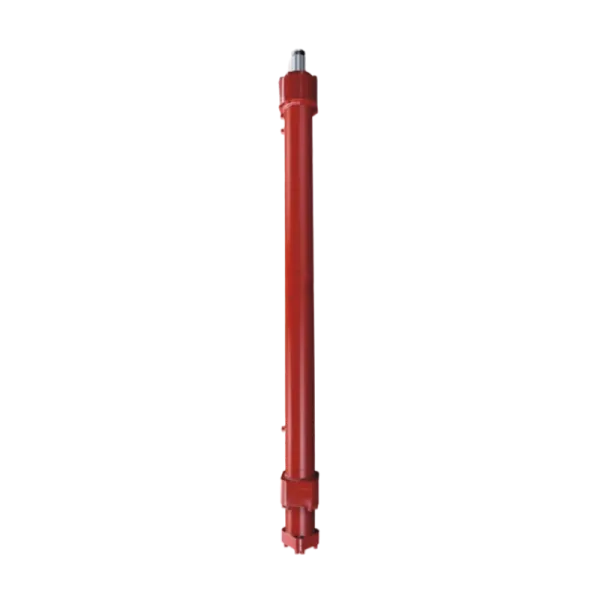
Understand the Different Jobs of the Main Oil Cylinder and Boom Cylinder
The Main Oil Cylinder converts hydraulic power into concrete pumping force
The Main Oil Cylinder is part of the pumping circuit. It transfers hydraulic energy to the concrete delivery cylinders, which push and pull the concrete pistons through the pumping stroke. Its performance directly affects output volume, stroke smoothness, pressure stability, and the ability to handle difficult concrete mixtures.
- Primary function: Drive the concrete delivery pistons.
- Typical operating pattern: Repeated reciprocating movement over many hours.
- Main performance concern: Consistent force throughout every pumping cycle.
- Typical failure result: Reduced output, irregular pumping, pressure loss, oil leakage, or complete pumping stoppage.
- Most important design factors: Bore size, rod diameter, stroke length, sealing system, rod surface quality, and fatigue resistance.
Because the Main Oil Cylinder works continuously during concrete placement, small hydraulic losses can become major productivity problems. Internal leakage may cause slow piston movement, incomplete strokes, higher oil temperature, and increased fuel consumption from the hydraulic power unit.
The Boom Cylinder positions and supports the placing boom
The Boom Cylinder controls one or more boom sections as the operator unfolds, raises, lowers, or positions the boom. It does not normally push concrete through the pipeline. Instead, it manages a suspended structure that is exposed to changing loads, vibration, wind, and sudden movement during repositioning.
- Primary function: Raise, lower, fold, or extend a boom section.
- Typical operating pattern: Intermittent movement with high load peaks.
- Main performance concern: Controlled movement and load holding.
- Typical failure result: Boom drift, unstable positioning, slow movement, abnormal noise, or unsafe operation.
- Most important design factors: Load capacity, rod buckling resistance, valve compatibility, mounting geometry, sealing reliability, and corrosion protection.
The Boom Cylinder may operate for fewer total cycles than the Main Oil Cylinder, but each movement can involve a high moment load. For this reason, a cylinder that appears adequate during a no-load test may still perform poorly when the boom is fully extended or working in windy conditions.
Compare the Core Parameters Before Choosing a Replacement
Use the cylinder function and hydraulic circuit as the first selection criteria
A replacement should match the original hydraulic circuit and mechanical geometry rather than only matching its outside appearance. A Main Oil Cylinder with the wrong stroke length can cause incomplete pumping cycles. A Boom Cylinder with the wrong closed length can interfere with boom folding or create excessive structural stress.
| Parameter |
Main Oil Cylinder |
Boom Cylinder |
Why It Matters |
| Primary duty |
Drive concrete delivery pistons |
Move and hold boom sections |
Determines the required force profile and control response |
| Movement type |
Continuous reciprocating stroke |
Intermittent extension and retraction |
Influences fatigue design and seal wear |
| Load pattern |
Repeated hydraulic and impact loads |
Changing bending and suspended boom loads |
Determines rod strength and mounting requirements |
| Stroke requirement |
Must match the concrete piston stroke |
Must match boom geometry and folding sequence |
Incorrect stroke can reduce output or damage the mechanism |
| Pressure requirement |
High and repetitive working pressure |
Pressure varies with boom position and load |
Pressure rating must exceed the real system requirement |
| Rod requirement |
High wear resistance and straightness |
High buckling and side-load resistance |
Rod failure can cause costly downtime and safety risks |
| Seal requirement |
Long-life dynamic sealing |
Reliable sealing during load holding |
Seal failure causes leakage, drift, and contamination |
| Operating temperature |
Often rises during continuous pumping |
Usually influenced by ambient temperature and duty cycle |
Heat affects oil viscosity, seal life, and response speed |
| Control priority |
Fast and synchronized pumping strokes |
Stable, predictable, and precise boom movement |
Different priorities require different valve and damping setups |
Verify the dimensions and hydraulic specifications together
Buyers should collect the original cylinder drawing, nameplate information, and truck model before requesting a quotation. The following specifications should be checked as a complete set.
- Bore diameter.
- Rod diameter.
- Fully retracted length.
- Working stroke.
- Mounting pin diameter and mounting center distance.
- Port size, port position, and thread standard.
- Rated working pressure and proof pressure.
- Oil type and temperature range.
- Surface treatment of the piston rod.
- Seal material and seal arrangement.
- Required cushioning or end-of-stroke damping.
- Available installation space and maintenance clearance.
For a Main Oil Cylinder, the piston stroke must remain synchronized with the concrete delivery system. For a Boom Cylinder, the retracted length and mounting geometry are equally important because even a small dimensional error can change the boom angle or prevent correct folding.
Evaluate Actual Operating Experience Instead of Catalog Claims
Continuous pumping exposes the weaknesses of the Main Oil Cylinder
In actual concrete pumping, the Main Oil Cylinder experiences repeated acceleration, deceleration, pressure changes, and vibration. A well-designed unit should maintain a smooth stroke without visible hesitation or repeated pressure spikes.
Operators commonly notice the following differences between a reliable cylinder and a weak replacement:
- Stable pumping speed when the concrete mix changes moderately.
- Less hydraulic shock at the end of the stroke.
- Lower risk of external oil leakage around the rod seal.
- More consistent output during long pours.
- Lower oil temperature under the same pumping workload.
- Reduced need for emergency seal replacement.
When the Main Oil Cylinder develops internal leakage, the truck may still pump at low speed, which can make the problem difficult to identify. As the hydraulic oil warms, leakage may increase and the cylinder may lose force. This can create a pattern in which the machine works normally during a short test but loses performance after several hours.
Boom movement reveals the stability of the Boom Cylinder
Actual Boom Cylinder performance is judged by movement control rather than pumping output. The boom should extend and retract without sudden drops, vibration, drifting, or delayed response. Smooth motion is especially important when the boom is fully extended because the load moment is greater.
Operators should observe the following during a practical test:
- Raise the boom slowly and confirm that movement starts without a sudden jump.
- Stop the control valve in several positions and check whether the boom holds its position.
- Move the boom through the full working range and listen for impact noise.
- Repeat the movement after the hydraulic oil reaches normal operating temperature.
- Test the boom with the delivery pipe installed because pipe weight changes the load.
- Inspect the rod, welds, pins, and mounting points after the test.
A Boom Cylinder that drifts after the control lever is released may have internal seal leakage, a valve problem, air in the circuit, or excessive clearance in the mounting system. The cylinder should not be blamed before the complete hydraulic circuit is checked.
Battery life is a truck-system issue, not a cylinder rating
Hydraulic cylinders do not contain a battery and do not have a battery life rating. However, buyers often mention battery life because the truck's electrical system powers the control valves, sensors, engine starting system, and electronic monitoring functions that influence cylinder operation.
- A weak battery can slow electronic valve response during startup.
- Low voltage can create inconsistent control signals in electronically controlled systems.
- Repeated emergency starts may indicate excessive electrical or hydraulic resistance.
- Stable alternator output helps maintain consistent control performance during long pours.
- Battery condition should be tested separately from cylinder pressure and leakage.
For a fair evaluation, record battery voltage, charging voltage, hydraulic oil temperature, system pressure, cycle time, and leakage before and after the test. This prevents an electrical fault from being incorrectly treated as a Main Oil Cylinder or Boom Cylinder defect.
Compare the Advantages and Disadvantages for Different Jobs
Main Oil Cylinder advantages and disadvantages
- Advantages
- Provides the force required for continuous concrete delivery.
- Can maintain high productivity when bore, stroke, and pressure are correctly matched.
- Supports stable pumping of demanding concrete mixtures when the hydraulic system is properly tuned.
- Offers clear performance indicators through stroke speed, pressure, temperature, and leakage tests.
- Disadvantages
- Works under frequent repeated cycles, so seal and rod wear can develop quickly.
- Internal leakage may remain hidden until the oil becomes hot.
- Incorrect stroke or port configuration can stop the entire pumping operation.
- Replacement quality has a direct effect on output and downtime.
Boom Cylinder advantages and disadvantages
- Advantages
- Allows accurate placement of concrete in difficult or elevated locations.
- Can provide controlled boom movement when the cylinder and valve system are correctly matched.
- Supports safer operation by holding the boom in the required position.
- Can improve setup efficiency by reducing manual repositioning work.
- Disadvantages
- Is exposed to side loads, bending forces, vibration, and changing boom moments.
- Small leaks or valve faults may cause boom drift and create safety concerns.
- Mounting errors can place abnormal stress on the rod and cylinder body.
- Corrosion or impact damage on the rod can shorten seal life significantly.
Choose the Right Cylinder for the Purchasing Group
Contractors should prioritize uptime and predictable operating cost
Concrete contractors who operate trucks every day should focus on total operating cost rather than the lowest initial quotation. A Main Oil Cylinder with stronger fatigue resistance and reliable seals may cost more initially but reduce lost pour time and repeated service visits.
- Choose a Main Oil Cylinder with verified cycle durability for frequent pumping.
- Require clear pressure, stroke, and mounting specifications.
- Check whether seal kits and replacement rods are available locally.
- Request a warranty that covers leakage and manufacturing defects.
- Compare expected service life and maintenance time, not only unit price.
Fleet owners should prioritize interchangeability and maintenance control
Fleet owners often manage several truck models and need predictable parts inventory. A cylinder supplier should provide consistent dimensions, traceable production records, inspection information, and technical support for installation.
- Standardize compatible Main Oil Cylinder and Boom Cylinder models where possible.
- Keep records of cylinder serial numbers, installation dates, pressure readings, and repairs.
- Use consistent seal materials and hydraulic oil specifications across the fleet.
- Train maintenance staff to distinguish cylinder leakage from valve or pump faults.
- Maintain a spare cylinder or critical seal kit for trucks assigned to urgent projects.
Equipment dealers should prioritize fitment accuracy and after-sales support
Dealers need a supplier that can respond quickly to model variations. Two concrete pump trucks with similar pumping capacity may use different ports, pins, strokes, or mounting positions. A detailed drawing and fitment confirmation can prevent costly returns.
- Ask for dimensional drawings before confirming the purchase.
- Provide the truck model, production year, pump capacity, and original cylinder data.
- Confirm whether the cylinder is a direct replacement or requires modification.
- Request packaging that protects the rod and ports during transport.
- Confirm lead time for standard models and customized cylinders.
Rental companies should prioritize abuse resistance and inspection simplicity
Rental equipment may be operated by users with different skill levels and maintenance habits. For this group, rod protection, seal durability, visible inspection points, and easy replacement are especially important.
- Select cylinders with strong rod surface treatment and protective packaging.
- Use inspection checklists for leakage, drift, abnormal noise, and pin wear.
- Record hydraulic oil temperature and pressure during scheduled service.
- Replace damaged wipers before dirt reaches the main sealing system.
- Do not return a truck to service if the boom cannot hold its position safely.
Follow a Practical Inspection and Selection Process
Inspect the Main Oil Cylinder before installation
- Compare the new cylinder with the original drawing and physical unit.
- Confirm bore, rod diameter, stroke, retracted length, and mounting dimensions.
- Check that the rod is straight, clean, and free from dents or corrosion.
- Confirm port size, port direction, and thread compatibility.
- Inspect welds, mounting eyes, pins, and protective coatings.
- Verify the seal material against the hydraulic oil and temperature range.
- Flush contaminated hydraulic lines before connecting the cylinder.
- Bleed trapped air and operate the cylinder at low speed before full-load work.
Inspect the Boom Cylinder under controlled load
- Check the mounting pins and bushings for excessive clearance.
- Confirm that the cylinder is installed in the correct orientation.
- Operate the boom slowly through its complete range.
- Check for drift while the boom is held at several positions.
- Inspect the rod seal area after the oil reaches working temperature.
- Listen for knocking that may indicate air, loose pins, or end-of-stroke impact.
- Check the hydraulic valve and counterbalance system if the boom moves unexpectedly.
- Record the test result for future maintenance comparison.
The safest replacement decision is based on both static and dynamic testing. A cylinder may pass a pressure test while still showing poor response, excessive friction, or unstable movement during real operation.
Make the Final Decision with a Total Cost and Risk Comparison
Select the Main Oil Cylinder when pumping productivity is the main concern
The Main Oil Cylinder is usually the better focus when the truck suffers from slow delivery, uneven pumping, high hydraulic temperature, repeated internal leakage, or poor performance during long pours. The selected unit should be evaluated for cycle durability, hydraulic efficiency, seal life, and compatibility with the delivery piston system.
Select the Boom Cylinder when placement control and safety are the main concern
The Boom Cylinder deserves priority when the boom drifts, moves unevenly, produces abnormal impact noise, or cannot hold a safe position. Buyers should evaluate load holding, rod strength, mounting geometry, corrosion protection, and compatibility with the counterbalance valve.
Use a balanced decision checklist before placing the order
- Does the cylinder match the original stroke and retracted length?
- Does the rated pressure exceed the real operating pressure with a suitable safety margin?
- Are the rod, seals, welds, and mounting points designed for the actual load pattern?
- Has the supplier provided inspection and dimensional information?
- Can the supplier support installation, troubleshooting, and replacement parts?
- Has the complete hydraulic and electrical system been checked?
- Will the replacement reduce downtime over its expected service life?
- Is the product suitable for the contractor, fleet, dealer, or rental company's working conditions?
Jiaheng can be considered by buyers who need hydraulic cylinder manufacturing support, dimensional confirmation, and application-based selection for concrete pump trucks. The correct choice is not simply the cylinder with the largest bore or lowest price. It is the cylinder that matches the hydraulic circuit, mechanical geometry, duty cycle, maintenance capability, and safety requirements of the truck.
In summary, the Main Oil Cylinder determines how reliably the truck pumps concrete, while the Boom Cylinder determines how safely and accurately the boom places it. Evaluating both through core parameters, real operating tests, battery and electrical checks, stability observations, maintenance requirements, and total cost will lead to a more dependable purchasing decision.