Pump Truck Hydraulic Cylinder: Key Features and Applications
02 November. 2026
Share:
A Pump Truck Hydraulic Cylinder is a hydraulic actuator that converts pressurized oil into controlled linear motion for concrete pump trucks. It drives the concrete delivery mechanism, including the pumping piston, hopper components, or boom-related systems, depending on the vehicle design. By delivering high force in a compact package, a reliable cylinder helps a concrete-pumping business maintain stable output, reduce unplanned downtime, and complete construction projects safely and on schedule.
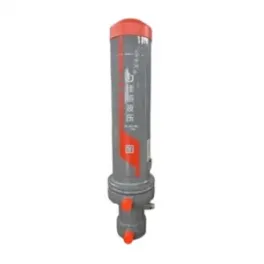
Jiaheng Pump Truck Hydraulic Cylinder for demanding concrete-pumping applications.
What Is a Pump Truck Hydraulic Cylinder?
A Pump Truck Hydraulic Cylinder consists of a cylinder barrel, piston, piston rod, gland, seals, ports, and mounting components. Hydraulic fluid enters one side of the cylinder, creating pressure against the piston. The piston rod then extends or retracts to produce mechanical movement.
In a concrete pump truck, the cylinder must operate under frequent load cycles. It may work in abrasive, wet, and high-vibration conditions while handling concrete with different aggregate sizes and slump values. For this reason, cylinder design is closely connected to pumping efficiency, pressure stability, and equipment service life.
Component
Primary function
Typical engineering concern
Cylinder barrel
Contains hydraulic pressure
Bore accuracy, honing quality, and internal surface finish
Piston and piston seals
Separate pressure chambers
Leakage control, extrusion resistance, and wear life
Piston rod
Transfers force to the pump mechanism
Hardness, straightness, chrome plating, and buckling resistance
Rod gland
Guides the rod and retains hydraulic fluid
Guide clearance, wiper performance, and seal compatibility
Mounting eye or flange
Connects the cylinder to the machine structure
Alignment, weld quality, and fatigue strength
Industry Background and Development
Hydraulic cylinders became essential to mobile construction machinery because hydraulic power provides high force density, precise control, and flexible installation. As concrete pump trucks developed from simple site machines into high-output, computer-controlled systems, their hydraulic actuators also became more specialized.
Modern pump trucks commonly use synchronized hydraulic circuits, load-sensing pumps, proportional valves, and electronic monitoring. The cylinder is therefore not an isolated replacement part. Its bore diameter, rod diameter, stroke, cushioning method, seal package, and mounting geometry must match the complete hydraulic system.
Jiaheng serves this engineering environment by focusing on custom hydraulic cylinder manufacturing for mobile equipment and construction machinery. When selecting a Jiaheng Pump Truck Hydraulic Cylinder, buyers should provide the original drawing, equipment model, operating pressure, stroke, mounting dimensions, and working environment so that the replacement can be correctly validated.
Key Features of a High-Performance Pump Truck Hydraulic Cylinder
1. Correct force and dimensional design
Hydraulic cylinder force is determined mainly by pressure and effective piston area:
Extension force = hydraulic pressure × piston area
Retraction force = hydraulic pressure × (piston area − rod area)
A larger bore can increase force, but it also affects oil consumption, response speed, and system capacity. Engineers must balance the bore, rod diameter, stroke length, rated pressure, peak pressure, and duty cycle rather than selecting a cylinder by outside appearance alone.
2. Wear-resistant piston rod
The piston rod is exposed to impact, moisture, concrete dust, and side loading caused by imperfect alignment. Common treatments include induction hardening, hard-chrome plating, stainless-steel construction, and specialized surface coatings.
For demanding applications, important rod specifications may include:
Controlled straightness to minimize seal wear and friction.
Surface roughness suitable for the selected rod seal.
Chrome-layer adhesion and corrosion resistance.
Dimensional tolerance verified to the approved technical drawing.
Machining capability reaching 0.01 mm measurement resolution where required by the inspection plan.
3. Reliable sealing system
A pump truck cylinder commonly uses a rod seal, wiper seal, piston seal, guide ring, static O-rings, and backup rings. Seal material must match the hydraulic oil, temperature range, pressure, velocity, and contamination level.
Typical seal materials include polyurethane, nitrile rubber, hydrogenated nitrile rubber, and PTFE compounds. A seal that works well in a standard industrial cylinder may fail prematurely in a high-cycle concrete pump if it is not selected for dynamic pressure and abrasive contamination.
4. Cushioning and impact control
Hydraulic cushioning reduces piston impact near the end of the stroke. This feature is especially useful when the actuator reverses frequently or reaches the end of travel at high speed. Adjustable cushions, fixed cushions, or external flow-control valves may be used according to the system design.
5. Structural integrity and fatigue resistance
Concrete pump trucks experience repeated load cycles, vibration, and shock loading. The barrel, welds, mounting eyes, piston rod, and gland must withstand these forces without distortion or fatigue cracking.
A professional manufacturing and inspection program should include:
Material certificates and traceability for pressure-bearing components.
Weld procedure control and visual inspection.
Non-destructive testing where required, such as magnetic particle or ultrasonic testing.
Hydrostatic or proof-pressure testing according to the approved specification.
Dimensional inspection and functional cycling before shipment.
Applications of Jiaheng Pump Truck Hydraulic Cylinder
The main application is the concrete pumping system. However, the exact cylinder configuration depends on the pump truck architecture and the manufacturer’s hydraulic circuit.
Concrete pumping piston actuation
In many truck-mounted concrete pumps, hydraulic cylinders drive the delivery pistons that push concrete through the S-valve or rock valve. The actuator must provide repeatable stroke movement and stable reversal. Poor synchronization can cause pressure fluctuations, reduced output, and increased wear on the pumping components.
Hopper and valve mechanisms
Hydraulic cylinders may also operate hopper gates, material valves, or cleaning and maintenance mechanisms. These applications may require shorter strokes, different mounting arrangements, and greater attention to contamination protection.
Boom and outrigger systems
Some pump truck hydraulic cylinders are used in boom articulation, telescopic sections, or outrigger legs. These cylinders often have different requirements from pumping cylinders, including load-holding valves, higher buckling resistance, larger rod diameters, or specialized pin connections.
Replacement and refurbishment projects
When an original cylinder is no longer available, a replacement cylinder can be manufactured from measured dimensions and application data. A Jiaheng Pump Truck Hydraulic Cylinder may be engineered as an OEM replacement or as a customized assembly, provided that the hydraulic interface and mechanical envelope are accurately confirmed.
Quality Standards and Inspection Requirements
Quality claims should be linked to a documented inspection method rather than a general statement such as “high quality.” Depending on the project, the technical file for a hydraulic cylinder may reference the following standards and practices:
Reference
How it supports cylinder quality
ISO 10100
Hydraulic fluid power cylinder acceptance tests, including performance and leakage evaluation.
ISO 4413
General rules and safety requirements for hydraulic systems and their components.
ASTM E18
Rockwell hardness testing for applicable metal components.
ASTM E1444/E1444M
Magnetic particle testing when specified for detecting surface and near-surface discontinuities.
ASTM B117
Salt-spray exposure testing for applicable corrosion-resistant finishes, when required by the customer.
Actual standards should be confirmed in the purchase specification because not every test applies to every cylinder. For traceable production, buyers should also request dimensional records, pressure-test results, seal batch information, and a final inspection report. A robust supplier program may include 100% visual, dimensional, and functional inspection before dispatch, with critical characteristics recorded against the approved drawing.
Common Misconceptions and Selection Errors
“Any cylinder with the same stroke will fit.”
Stroke is only one parameter. Bore diameter, rod diameter, closed length, port size, mounting style, pin diameter, cushion design, seal arrangement, and pressure rating must also match. A cylinder with the correct stroke but the wrong retracted length can damage the linkage or prevent full machine movement.
“The highest pressure rating is always better.”
A higher rating does not automatically improve performance. The hydraulic pump, relief valve, hoses, fittings, welds, and machine frame must all support the operating pressure. Overspecification can increase cost, weight, and response time without solving the original problem.
“External oil leakage is the only sign of cylinder failure.”
Internal bypassing can occur without visible leakage. Symptoms include slow movement, cylinder drift, unstable pressure, excessive heat, and reduced concrete output. A pressure-holding test and differential diagnosis are needed before replacing the complete cylinder.
New seals cannot correct a scored barrel, bent rod, worn guide ring, damaged chrome layer, or misaligned mounting. During refurbishment, technicians should inspect the rod, bore, gland, piston, welds, and connection points before installing a new seal kit.
“A catalog model is sufficient for every pump truck.”
Pump truck manufacturers frequently use model-specific dimensions and hydraulic interfaces. A customized cylinder based on the equipment identification plate and original drawing is usually safer than relying on a visual match.
Practical Example: Diagnosing a Low-Output Concrete Pump
Consider a truck-mounted concrete pump that gradually loses output after several hours of operation. The operator notices slower piston movement, higher oil temperature, and occasional pressure fluctuation.
Check the hydraulic circuit: Verify oil level, filter condition, relief-valve settings, and pump performance.
Inspect the cylinder externally: Look for rod scoring, seal leakage, damaged mounts, or abnormal side loading.
Perform a holding test: Determine whether the piston drifts under a controlled load.
Measure critical dimensions: Check rod straightness, barrel bore condition, pin clearance, and mounting alignment.
Review operating data: Compare actual pressure, cycle time, oil temperature, and concrete output with the equipment specification.
Select the repair route: Replace seals only if the rod and barrel remain within tolerance; otherwise, use a fully inspected replacement cylinder.
In this situation, installing a correctly engineered Pump Truck Hydraulic Cylinder can restore pressure stability and cycle consistency. However, the root cause may also be contaminated oil, a worn valve, poor alignment, or an undersized hydraulic pump. Replacing the cylinder without checking the complete system can lead to repeated failure.
How to Order the Correct Jiaheng Cylinder
To shorten engineering time and reduce ordering errors, provide the following information to Jiaheng:
Concrete pump truck brand, model, and production year.
Original cylinder part number or technical drawing.
Bore diameter, rod diameter, stroke, and retracted length.
Mounting type, pin dimensions, port thread, and cushion requirements.
Normal operating pressure and maximum pressure.
Hydraulic oil type, ambient temperature, and duty cycle.
Required quantity, delivery schedule, and packaging conditions.
Requested inspection documents, coating requirements, and applicable standards.
For urgent equipment support, a supplier should provide clear technical feedback, identify missing dimensions, and communicate a response target such as within 24 hours. Before mass production, approve a drawing or first article so that the cylinder’s envelope, ports, and mounting interfaces are confirmed.
Maintenance Practices That Extend Service Life
Even a well-manufactured cylinder can fail early if the hydraulic system is poorly maintained. Operators should:
Use clean hydraulic fluid and replace filters at the recommended intervals.
Keep the piston rod clean and protect it from concrete splash and impact.
Inspect rod seals and wipers for leakage, hardening, or extrusion.
Check pins, bushes, and mounting brackets for looseness or misalignment.
Monitor oil temperature, cycle time, pressure, and abnormal noise.
Stop operation if the rod is bent, the mount is cracked, or pressure becomes unstable.
Final Takeaways
A Pump Truck Hydraulic Cylinder is a precision pressure-bearing actuator that directly affects concrete output, equipment safety, and maintenance cost. The most important selection factors are correct force calculation, dimensional compatibility, rod and barrel durability, seal performance, cushioning, fatigue resistance, and documented testing.
Jiaheng supports application-focused cylinder selection by using equipment data, approved drawings, inspection records, and relevant standards such as ISO 10100 and ISO 4413. Whether the requirement is an OEM replacement, a custom actuator, or a refurbishment project, buyers should verify the complete hydraulic and mechanical system before ordering. Exploring the correct specifications early can help prevent leakage, downtime, repeated failures, and avoidable project delays.