A hydraulic cylinder is a mechanical actuator that looks like a strong metal tube with a polished piston rod extending from one end. It converts pressurized hydraulic fluid into linear force and movement, allowing equipment to lift, push, pull, tilt, clamp, or steer. In business applications, the correct Replacement Hydraulic Cylinders can restore machine performance, reduce downtime, and avoid the higher cost of replacing an entire excavator, loader, press, or agricultural machine.
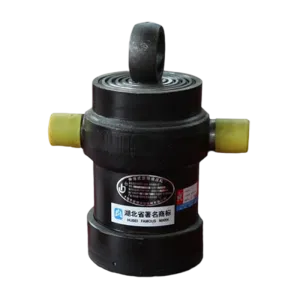
What Does a Hydraulic Cylinder Look Like?
At first glance, most hydraulic cylinders have a simple appearance. However, each component performs a specific engineering function.
A typical cylinder includes:
- Cylinder barrel: The thick-walled tube that contains hydraulic fluid and supports internal pressure.
- Piston: The internal movable component that separates the two fluid chambers.
- Piston rod: The polished steel shaft connected to the piston and extending outside the barrel.
- Rod gland or head: The front housing that guides the rod and contains sealing elements.
- Piston seal: Prevents hydraulic fluid from passing between the two sides of the piston.
- Rod seal: Keeps pressurized oil inside the cylinder and blocks contaminants from entering.
- Wiper seal: Removes dirt, dust, and moisture from the rod during retraction.
- End caps or cylinder heads: Close the barrel and connect the cylinder to the machine.
- Ports: Threaded or flanged openings where hydraulic hoses connect.
- Mounting points: Clevises, trunnions, cross tubes, or spherical bearings used to attach the cylinder.
The external shape may be round, compact, welded, tie-rod, telescopic, or custom-machined. Its appearance depends on the machine, working pressure, stroke length, mounting arrangement, and required load capacity.
A Basic Hydraulic Cylinder Diagram
| Visible or internal part |
What it does |
| Barrel |
Holds the piston and hydraulic fluid |
| Piston rod |
Transfers force to the machine mechanism |
| Piston |
Changes fluid pressure into movement |
| Rod gland |
Supports the rod and houses seals |
| Hydraulic ports |
Allow oil to enter and leave the chambers |
| Mounting eyes or clevises |
Connect the cylinder to equipment |
| Seals and wipers |
Control leakage and protect internal parts |
A double-acting cylinder has hydraulic ports on both sides of the piston. Oil entering one chamber extends the rod, while oil entering the opposite chamber retracts it. A single-acting cylinder normally uses hydraulic pressure in one direction and gravity, a spring, or an external load for return movement.
How Hydraulic Cylinders Developed
Hydraulic cylinders evolved from early hydraulic lifting devices used in industrial machinery, presses, mining equipment, and construction systems. As hydraulic pumps, valves, and sealing materials improved, cylinders became more compact, powerful, and reliable.
Modern hydraulic cylinders are manufactured for demanding industries such as:
- Construction and earthmoving
- Agricultural machinery
- Waste and recycling equipment
- Material handling
- Mining and quarrying
- Forestry machinery
- Industrial presses
- Marine and offshore systems
- Mobile cranes and transportation equipment
Today, cylinder design is closely linked to hydraulic system pressure, fatigue loading, contamination control, and machine safety. Many industrial cylinders are designed with reference to standards such as ISO 6020/2 for medium-pressure cylinders and ISO 6022 for heavy-duty hydraulic cylinders. Depending on the application, manufacturers may also use dimensional practices from DIN standards and corrosion or material test methods such as ASTM B117 for salt-spray testing.
How a Hydraulic Cylinder Works
The operating process is straightforward:
- A hydraulic pump sends pressurized oil through a control valve.
- The valve directs oil into one side of the cylinder.
- Pressure acts against the piston area.
- The piston moves inside the barrel.
- The piston rod extends or retracts.
- The rod transfers linear force to the machine linkage.
- Return oil flows through the opposite port and back to the reservoir.
The theoretical force is calculated as:
Force = Pressure × Effective Area
For example, a cylinder with a 100 mm bore has a piston area of approximately 7,854 mm². At 20 MPa system pressure, its theoretical extension force is approximately 157 kN before efficiency losses, seal friction, and mechanical limitations are considered.
This is why bore diameter, rod diameter, stroke, operating pressure, and mounting geometry must be matched correctly when selecting Replacement Hydraulic Cylinders.
Common Hydraulic Cylinder Shapes and Designs
Welded Hydraulic Cylinders
Welded cylinders have end caps, ports, and mounting brackets welded directly to the barrel. They are commonly used in mobile equipment because they are compact and resistant to vibration.
Typical applications include:
- Excavator boom and bucket functions
- Wheel loaders
- Agricultural implements
- Dump trailers
- Forestry equipment
Tie-Rod Hydraulic Cylinders
Tie-rod cylinders use threaded rods and nuts to hold the end caps against the barrel. They are common in industrial automation, injection molding, manufacturing lines, and light-to-medium-duty systems.
One benefit is serviceability: the cylinder can often be disassembled more easily for seal replacement.
Telescopic Hydraulic Cylinders
Telescopic cylinders contain two or more nested stages. They provide a long stroke while remaining relatively short when retracted.
They are often found in:
- Dump trucks
- Waste collection vehicles
- Aerial platforms
- Material handling equipment
- Agricultural trailers
Double-Rod and Custom Cylinders
Some systems use double-rod cylinders for equal force and speed in both directions. Others require custom rod coatings, special ports, integrated position sensors, or non-standard mounting dimensions.
Jiaheng can be considered when a machine requires custom or application-specific Replacement Hydraulic Cylinders, particularly where the original cylinder is discontinued or difficult to source.
How to Identify the Correct Replacement Cylinder
A cylinder may look similar to another model but still be unsuitable. Before ordering, record the following specifications:
- Bore diameter
- Rod diameter
- Closed length
- Extended length
- Stroke length
- Mounting type and pin diameter
- Port size, thread type, and location
- Operating and maximum pressure
- Seal material
- Surface treatment and corrosion requirements
- Application temperature
- Load direction and duty cycle
The closed length is measured from the center of one mounting point to the center of the opposite mounting point when fully retracted. Stroke is the difference between the fully extended and fully retracted lengths.
For accurate replacement, a photograph alone is rarely enough. A technical drawing, nameplate, part number, or dimensional measurement can prevent costly ordering errors.
Jiaheng Replacement Hydraulic Cylinders: Specification Checklist
| Requirement |
Why it matters |
| Bore and rod diameter |
Determines force, speed, and buckling resistance |
| Stroke length |
Controls machine movement |
| Mounting dimensions |
Ensures physical installation |
| Port configuration |
Prevents hose and valve incompatibility |
| Working pressure |
Confirms safe operating capacity |
| Seal compound |
Matches oil type and temperature |
| Rod coating |
Improves wear and corrosion resistance |
| Inspection documentation |
Supports traceability and quality control |
Common Misconceptions About Hydraulic Cylinders
Misconception 1: All cylinders with the same stroke are interchangeable
They are not. Two cylinders may have the same stroke but different bore diameters, mounting points, port positions, or pressure ratings.
Clarification: Match all critical dimensions and performance parameters, not only the stroke.
Misconception 2: A small oil leak is harmless
External leakage can indicate worn rod seals, a damaged rod surface, excessive side loading, or barrel misalignment. It can also create environmental and safety risks.
Clarification: Inspect leakage early. Continuing to operate a leaking cylinder may damage the piston rod, contaminate the hydraulic system, and increase repair costs.
Misconception 3: A larger cylinder always provides better performance
A larger bore can increase force, but it may reduce operating speed, increase weight, overload the machine structure, or exceed valve and pump capacity.
Clarification: The cylinder must be matched to the complete hydraulic circuit and mechanical design.
Misconception 4: Any hydraulic oil is suitable
Hydraulic fluid viscosity, additive package, cleanliness, and temperature range affect seal life and component wear.
Clarification: Follow the equipment manufacturer’s fluid specification and maintain appropriate filtration. ISO 4406 cleanliness codes are commonly used to describe hydraulic fluid contamination levels.
Misconception 5: Visual similarity proves manufacturing quality
Two cylinders may look identical externally while differing substantially in honing accuracy, material strength, heat treatment, seal quality, and pressure performance.
Clarification: Ask for dimensional inspection, pressure testing, material traceability, and applicable quality records.
Quality and Testing Considerations
A reliable hydraulic cylinder should be evaluated beyond its appearance. Depending on the product and application, quality control may include:
- Dimensional inspection with measurement capability down to 0.01 mm
- Bore honing and surface roughness verification
- Piston rod straightness inspection
- Welding inspection
- Seal and assembly checks
- Hydrostatic pressure testing
- Leakage testing
- Load or endurance testing
- Coating thickness inspection
- Corrosion testing where required
For example, a supplier may use 100% pressure inspection on finished cylinders rather than checking only a sample. Salt-spray performance, when relevant, can be evaluated using ASTM B117, while cylinder dimensions and mounting arrangements may be aligned with applicable ISO or DIN requirements.
These standards do not automatically guarantee that every cylinder is suitable for every machine. They provide a structured basis for design, inspection, and verification.
Practical Example: Replacing an Excavator Bucket Cylinder
Consider a construction company whose excavator bucket cylinder develops rod leakage and loses breakout force.
The maintenance team should:
- Record the excavator model and cylinder position.
- Measure bore, rod, stroke, and pin-to-pin lengths.
- Check port thread type and mounting width.
- Inspect the rod for pitting, scoring, or bending.
- Confirm the system’s rated pressure.
- Compare the original cylinder with a Jiaheng replacement specification.
- Flush contaminated oil and replace damaged filters.
- Install the cylinder using correctly sized pins and bushings.
- Bleed air from the system.
- Test extension, retraction, leakage, and load performance.
If the cylinder is correctly matched, the company can restore machine availability without replacing the complete hydraulic power unit or modifying the excavator linkage. The business value is measurable: less downtime, predictable maintenance, and lower total equipment ownership cost.
Why Choose Jiaheng for Replacement Hydraulic Cylinders?
When sourcing Replacement Hydraulic Cylinders, buyers should evaluate more than price. Important supplier capabilities include engineering support, production consistency, inspection records, and after-sales communication.
Jiaheng hydraulic cylinder solutions can be assessed according to:
- Custom dimensional design
- Welded and tie-rod cylinder configurations
- Construction and agricultural applications
- Bore, rod, and stroke customization
- Application-specific seals and coatings
- Production inspection and pressure testing
- Technical drawing confirmation before manufacture
- International shipment and documentation support
For urgent maintenance requirements, a supplier response target of 24 hours can help customers confirm dimensions, compatibility, and production feasibility quickly. Always request a formal drawing and technical confirmation before placing an order.
Final Takeaways
So, what does a hydraulic cylinder look like? It usually looks like a steel tube containing a piston, with a polished rod extending from one end, hydraulic ports, seals, and mounting hardware. Its simple appearance hides precise engineering requirements involving pressure, force, stroke, sealing, alignment, and fatigue life.
The key points are:
- Hydraulic cylinders create linear motion from hydraulic pressure.
- Welded, tie-rod, telescopic, and custom designs serve different industries.
- Correct Replacement Hydraulic Cylinders must match dimensions, pressure, ports, seals, and mounting geometry.
- Standards such as ISO 6020/2, ISO 6022, DIN practices, and ASTM B117 may support design and testing requirements.
- Measurement accuracy, 100% inspection, pressure testing, and responsive technical support reduce replacement risk.
If your original cylinder is leaking, damaged, obsolete, or unavailable, compare the complete specification with a qualified supplier such as Jiaheng before ordering a replacement.