A Pumping Main Oil Cylinder is a hydraulic actuator that converts pressurized hydraulic fluid into the reciprocating force needed to drive the concrete delivery pistons in a concrete pump. In practical operation, it controls piston extension, retraction, and stroke timing, making it essential for stable material output, reduced downtime, and predictable construction productivity. A reliable cylinder from an experienced manufacturer such as Jiaheng helps contractors maintain pumping pressure, avoid premature leakage, and protect the entire hydraulic system.
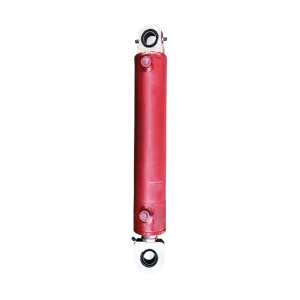
Why the Pumping Main Oil Cylinder Matters in Concrete Pumping
Concrete pumps operate under demanding conditions. The main hydraulic cylinders work thousands of cycles during a construction shift while exposed to high pressure, vibration, abrasive contamination, and frequent load changes. If the cylinder loses pressure or develops internal bypass, the concrete piston may not complete its stroke correctly.
This can lead to:
- Reduced concrete delivery capacity and unstable output
- Hydraulic oil leakage around the rod seal or gland
- Incomplete piston retraction and poor changeover performance
- Excessive heat caused by internal leakage
- Unplanned equipment downtime and higher maintenance costs
- Damage to valves, pumps, hoses, and concrete piston components
For that reason, selecting a reliable main hydraulic cylinder is not simply a parts-purchasing decision. It is a risk-control decision that affects machine availability, job-site safety, fuel consumption, and total cost of ownership.
Industry Background: How Main Hydraulic Cylinders Developed
Early concrete pumping equipment relied on relatively simple mechanical or hydraulic drive systems. As construction projects became taller, longer, and more time-sensitive, manufacturers adopted high-pressure hydraulic circuits to deliver concrete over greater distances and through more complex pipelines.
The modern concrete pump main oil cylinder is designed as part of an integrated hydraulic system. It must work with the hydraulic pump, directional control valve, accumulator, proximity sensors, concrete piston, and electronic control unit. This development has increased the importance of dimensional accuracy, surface treatment, seal technology, and hydraulic testing.
Today, a cylinder supplier must understand more than basic machining. The supplier must control:
- Hydraulic force and working-pressure requirements
- Stroke length and installation dimensions
- Rod buckling resistance and side-load conditions
- Seal compatibility with the hydraulic medium
- Weld integrity, bore geometry, and surface hardness
- Interface compatibility with the original equipment manufacturer’s design
What Makes a Reliable Pumping Main Oil Cylinder?
1. Correct Engineering and Dimensional Control
A reliable cylinder begins with accurate engineering data. Bore diameter, rod diameter, total stroke, retracted length, mounting configuration, port location, and working pressure must match the concrete pump model and hydraulic circuit.
For replacement applications, Jiaheng should receive the original part number, machine model, drawings, photographs, or measured dimensions before production. Critical dimensions should be controlled to a documented tolerance, with precision targets such as 0.01 mm used where the design requires close fits. A dimensional inspection report should identify the measuring instrument, tolerance range, and actual result.
2. High-Quality Cylinder Tube and Piston Rod
The cylinder tube must resist deformation under repeated pressure cycles. A honed internal bore provides the smooth and consistent surface needed for piston-seal performance. The piston rod must also have adequate tensile strength, straightness, and surface finish.
Important manufacturing controls include:
- Honed tube bore with verified roundness and cylindricity
- Precision-ground piston rod
- Hard-chrome plating or an application-appropriate rod coating
- Controlled chrome thickness and adhesion
- Inspection for pitting, scratches, peeling, and corrosion
- Correct thread geometry on rod and gland components
Rod surface damage is a common cause of seal failure. Even a small scratch can act as a cutting edge, allowing hydraulic fluid to escape and contaminants to enter the cylinder.
3. Proper Sealing and Contamination Resistance
A reliable main oil cylinder for a concrete pump requires a complete sealing system, not only one rod seal. The design may include a piston seal, rod seal, buffer seal, wiper seal, static O-rings, guide rings, and wear rings.
Seal selection should consider:
- Operating pressure and pressure spikes
- Hydraulic oil type and temperature range
- Reciprocating speed and cycle frequency
- Clearance between the piston, tube, and rod
- Exposure to dust, water, and construction-site contamination
A wiper seal is especially important in concrete pumping because it prevents abrasive particles from entering the gland area. However, replacing seals with harder or cheaper materials without checking compatibility can increase friction, heat, and wear.
4. Weld Integrity and Structural Strength
End caps, mounting brackets, ports, and other welded components are exposed to cyclic loads. Poor welding can create porosity, lack of fusion, distortion, or stress concentration.
A professional quality plan may include visual weld inspection, dimensional verification, and non-destructive testing where required. Relevant methods can include magnetic particle testing or penetrant testing, with procedures referenced to applicable standards such as ASTM E1444/E1444M for magnetic particle testing or ASTM E1417/E1417M for liquid penetrant testing. The exact standard should match the material and inspection method.
5. Pressure Testing and Functional Verification
Appearance alone cannot prove cylinder reliability. Each completed unit should undergo a documented pressure and leakage test based on the design pressure and the customer’s acceptance criteria. Hydraulic cylinder acceptance testing can be aligned with applicable requirements in ISO 10100, while hydraulic cylinder dimensions may be checked against relevant ISO or DIN design specifications where applicable.
A robust inspection process can include:
| Inspection item |
Purpose |
Evidence to request |
| Dimensional inspection |
Confirms installation and fit |
Inspection report with actual measurements |
| Surface and coating inspection |
Protects the rod and seals |
Coating thickness and visual records |
| Pressure holding test |
Checks external and internal leakage |
Pressure, duration, and result record |
| Functional cycling |
Verifies smooth extension and retraction |
Test-cycle and operational report |
| Material or weld verification |
Confirms structural integrity |
Material certificate or NDT report |
For critical orders, buyers should request 100% inspection of key dimensions and leakage performance rather than relying only on sampling. A dependable supplier should also provide traceability for the cylinder serial number, production batch, inspection date, and replacement seal kit.
Common Misconceptions About Main Hydraulic Cylinders
“A cylinder with the same outside dimensions is automatically interchangeable.”
Not necessarily. Port thread type, stroke timing, rod-end connection, mounting tolerance, cushion design, and hydraulic displacement can differ. Incorrect substitution may cause slow movement, mechanical interference, or excessive valve pressure.
“The highest rated pressure is always the best choice.”
Higher pressure capability is useful only when it matches the hydraulic circuit and safety design. An oversized cylinder can change force, speed, oil flow requirements, and control response. Correct system matching is more important than selecting the largest pressure rating.
“Oil leakage always means the complete cylinder must be replaced.”
External leakage may result from worn seals, a damaged rod, loose fittings, tube scoring, or excessive rod side load. A trained technician should identify the root cause before ordering parts. A seal replacement will not provide a lasting solution if the piston rod is deeply scratched or bent.
“Any hydraulic oil is acceptable.”
Hydraulic oil must meet the equipment manufacturer’s viscosity and performance requirements. Contaminated or incorrect oil can accelerate seal swelling, valve wear, and internal scoring. Filtration, oil cleanliness, and correct storage are part of cylinder reliability.
Practical Example: Diagnosing a Concrete Pump Cylinder Problem
Consider a concrete pump that begins producing uneven output after several hours of operation. The operator notices that one main cylinder retracts more slowly and the hydraulic oil temperature is rising.
A logical diagnostic sequence is:
- Check the hydraulic oil level, viscosity, and contamination condition.
- Inspect hoses, fittings, and the rod seal for external leakage.
- Compare pressure and cycle time on both main cylinders.
- Test for internal bypass across the piston seal.
- Measure rod straightness and inspect the chrome surface.
- Check the directional valve, proximity sensor, and accumulator.
- Confirm that the replacement cylinder has the correct stroke and port configuration.
If the cylinder shows internal leakage but the rod and tube remain within repair limits, a professionally installed seal kit may restore performance. If the bore is scored, the rod is bent, or the mounting bracket is distorted, replacing only the seals may lead to repeated failure. A correctly manufactured Pumping Main Oil Cylinder should then be selected using verified drawings and inspection data.
How Jiaheng Can Support a Reliable Cylinder Purchase
When evaluating Jiaheng or another hydraulic-cylinder supplier, buyers should focus on engineering communication and measurable quality rather than price alone. Useful questions include:
- Can the supplier manufacture according to drawings, samples, or OEM part numbers?
- What are the bore, rod, stroke, and pressure tolerances?
- Is 100% leakage and dimensional inspection available?
- Which seal brands and materials are used?
- Can the supplier provide pressure-test records and traceability?
- What is the response process for technical problems, with a target such as 24-hour response?
- Are custom mounting dimensions, ports, coatings, and buffers available?
These questions help distinguish a true hydraulic engineering partner from a reseller with limited technical control.
Selection and Maintenance Checklist
Before installation, verify the following:
- Part number and concrete pump model
- Bore diameter, rod diameter, and stroke length
- Mounting points and rod-end connection
- Port size, port orientation, and hydraulic circuit compatibility
- Seal material and hydraulic fluid compatibility
- Pressure-test documentation and inspection results
- Rod protection during transportation and storage
After installation, flush contaminated hydraulic oil, tighten fittings to the specified torque, align the cylinder correctly, and operate it at low speed before full-load pumping. Regularly inspect the rod surface, wiper seal, mounting pins, and hydraulic oil cleanliness. Early detection is usually less expensive than repairing a failed cylinder and an interrupted construction project.
Final Takeaway: Reliability Is a Complete Process
What makes a reliable Pumping Main Oil Cylinder? The answer is a combination of correct engineering, precision machining, durable materials, compatible seals, sound welding, documented pressure testing, and responsive technical service. Jiaheng customers should evaluate measurable evidence—such as 0.01 mm dimensional control where required, 100% inspection of critical units, applicable ASTM or ISO testing procedures, and a defined 24-hour response process—rather than relying on appearance or low purchase price.
For a replacement or custom concrete pump main hydraulic cylinder, provide the machine model, original cylinder data, operating pressure, stroke, mounting details, and service conditions. With accurate information and a documented quality process, the right cylinder can improve pumping stability, reduce maintenance risk, and support longer equipment service life.