Where Are Telescopic Hydraulic Cylinders Used? They are used in equipment that needs a long working stroke but has limited installation space. A telescopic hydraulic cylinder, also called a multistage hydraulic cylinder, uses two or more nested steel tubes that extend hydraulically and retract into a compact assembly. This design creates high lifting, tipping, or dumping movement while preserving valuable chassis or machine space. For businesses, the right Crane Telescopic Hydraulic Cylinder can improve payload handling, equipment versatility, uptime, and operating efficiency.
Jiaheng manufactures and supplies hydraulic cylinder solutions for mobile cranes, dump trucks, refuse vehicles, agricultural machinery, material-handling equipment, and other heavy-duty applications. Selecting the correct bore diameter, stroke length, mounting arrangement, working pressure, sealing system, and surface treatment is essential for safe and reliable performance.
What Is a Telescopic Hydraulic Cylinder?
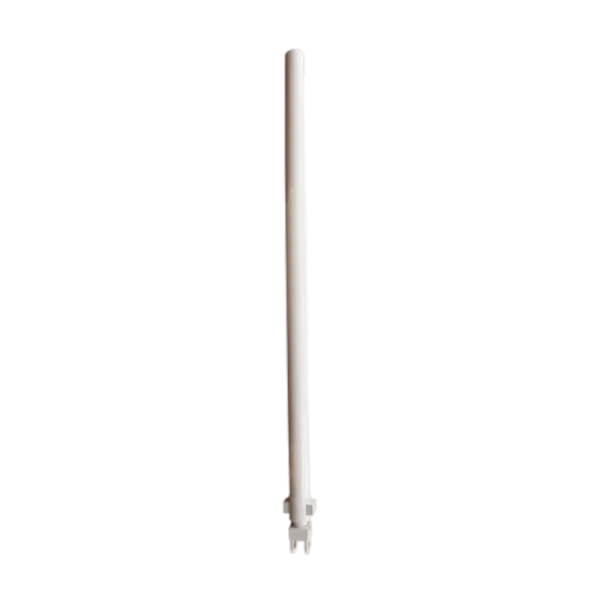
A telescopic hydraulic cylinder is a linear actuator made from multiple concentric stages. Hydraulic fluid enters the cylinder and generates force against the piston or plunger area. The stages extend sequentially, producing a long stroke from a relatively short retracted length.
Compared with a conventional single-stage cylinder, a telescopic cylinder offers:
- Extended stroke: Multiple stages can provide several times the retracted installation length.
- Compact packaging: Nested barrels reduce the space required when the cylinder is fully retracted.
- High force capacity: Large-bore stages can deliver substantial pushing or lifting force.
- Flexible equipment design: Engineers can position the actuator where a standard cylinder would not fit.
Telescopic cylinders may be single-acting or double-acting. Single-acting models normally extend through hydraulic pressure and retract through gravity or an external mechanical load. Double-acting models use hydraulic pressure for both extension and retraction, offering improved control when load direction, speed, or installation angle requires active retraction.
Where Are Telescopic Hydraulic Cylinders Used?
1. Mobile Cranes and Truck-Mounted Cranes
Mobile cranes use telescopic cylinders in boom extension systems, outriggers, lifting mechanisms, and stabilizer assemblies. A Crane Telescopic Hydraulic Cylinder allows a crane boom or support leg to move through a long stroke without requiring an equally long retracted actuator.
In this application, engineers evaluate:
- Rated load and maximum operating pressure
- Buckling resistance under compression
- Side-load and misalignment tolerance
- Pin diameter, bushing arrangement, and mounting geometry
- Flow requirements for controlled extension and retraction
- Chrome plating, corrosion protection, and rod surface hardness
For crane equipment, the cylinder should be matched with load-holding valves, counterbalance valves, and appropriate hydraulic controls. A cylinder alone cannot compensate for poor circuit design or an unstable lifting configuration.
2. Dump Trucks and Tipping Trailers
Dump trucks commonly use front-mounted or underbody telescopic cylinders to raise the cargo body. The cylinder generates the tipping angle needed to discharge aggregate, soil, construction debris, grain, and other bulk materials.
This is one of the most recognizable uses of a Crane Telescopic Hydraulic Cylinder-style design, although dump-truck cylinders are usually engineered specifically for tipping rather than crane boom operation. Common requirements include:
- High lifting force during the initial stage of tipping
- Stable extension under uneven or shifting loads
- Protection from dust, water, stone impact, and road salt
- Adequate retraction speed after unloading
- Strong trunnions, pins, and mechanical mounting points
When a truck body carries a dense load, the initial breakaway force can be significantly higher than the force needed later in the tipping cycle. Therefore, sizing only by maximum stroke is a common engineering error.
3. Waste Collection and Refuse-Handling Equipment
Compactors, roll-off containers, hook-lift trucks, and refuse transfer systems use telescopic hydraulic cylinders for lifting, tilting, locking, and container movement. These machines often operate in dirty environments with frequent hydraulic cycles.
For refuse equipment, the cylinder specification should address:
- High cycle frequency and heat generation
- Abrasive particles around the rod and wiper seal
- Water and chemical exposure
- Shock loading during container placement
- Easy seal replacement and field maintenance
Jiaheng can help users define a suitable seal package, rod coating, drainage arrangement, and mounting design for municipal and industrial waste applications.
4. Agricultural and Forestry Machinery
Telescopic hydraulic cylinders are used in agricultural trailers, manure spreaders, grain carts, forestry trailers, log loaders, and harvesting equipment. These machines need compact actuators that can deliver long movement while traveling over uneven terrain.
Typical functions include:
- Opening and closing trailer sides or tailgates
- Tilting agricultural containers
- Extending loading platforms
- Positioning booms and cutting equipment
- Raising forestry loading arms
Because agricultural machinery may remain outdoors for long periods, corrosion resistance and contamination control are as important as nominal hydraulic force.
5. Material-Handling and Loading Equipment
Hook-lift systems, skip loaders, vehicle recovery systems, dock equipment, and specialized transport platforms use telescopic cylinders to extend, pull, tilt, or position heavy loads.
In these systems, the cylinder must work with the complete kinematic arrangement. The effective force changes as the mounting angle changes, so the design team should calculate the load moment throughout the entire movement rather than using a single static position.
6. Construction and Mining Equipment
Construction machinery and mining equipment use multistage hydraulic cylinders in dump bodies, access platforms, lifting frames, drilling support systems, and specialized attachments. These environments expose components to vibration, impact, abrasive dust, and fluctuating temperatures.
Heavy-duty designs may require:
- Induction-hardened or hard-chromed piston rods
- High-strength seamless honed tubes
- Wear rings to control lateral movement
- Protected rod wipers and contamination-resistant seals
- Finite element analysis for stress and buckling evaluation
- Hydraulic pressure testing and dimensional inspection
How Telescopic Hydraulic Cylinders Developed
Early hydraulic actuators were generally single-stage designs. As truck bodies, cranes, and mobile machinery became more compact, equipment manufacturers needed longer strokes without increasing the installation length. This requirement led to the wider adoption of nested-stage cylinders.
Over time, improvements in steel quality, honing technology, surface finishing, sealing compounds, and computer-aided engineering increased the service life of telescopic cylinders. Modern designs can include three, four, five, or more stages, depending on the required stroke, pressure, load, and retracted length.
Today, the design process combines hydraulic calculations with mechanical analysis. Bore ratio, stage sequence, rod diameter, wall thickness, buckling safety factor, flow velocity, and seal friction must be considered together.
How to Select the Correct Telescopic Cylinder
Start With the Operating Data
Before contacting Jiaheng or another hydraulic-cylinder supplier, prepare the following information:
| Parameter |
Why It Matters |
| Required stroke |
Determines the total movement and number of stages. |
| Retracted length |
Confirms whether the cylinder fits the available space. |
| Maximum load |
Determines bore size, wall thickness, and buckling requirements. |
| Working and peak pressure |
Defines pressure-rating and fatigue requirements. |
| Mounting method |
Influences alignment, side loading, pin stress, and installation. |
| Operating environment |
Guides coating, seal, wiper, and corrosion-protection choices. |
| Cycle frequency |
Helps determine thermal management and seal durability. |
Review Manufacturing and Quality Controls
Reliable telescopic-cylinder production depends on controlled processes, not only visual inspection. Ask the supplier how it manages material traceability, tube honing, welding, heat treatment, chrome plating, seal installation, and final testing.
Useful quality evidence may include:
- Dimensional inspection with measurement capability to 0.01 mm where applicable
- 100% inspection of critical dimensions or finished-cylinder pressure testing, according to the agreed quality plan
- Hydrostatic or hydraulic pressure testing based on the design specification
- Weld inspection using applicable procedures, including visual examination and, when required, nondestructive testing
- Material certificates and batch traceability
- Seal and surface-finish verification
Relevant references may include ASTM material specifications, DIN dimensional or hydraulic terminology standards, ISO 9001 quality-management practices, and ISO 4413 principles for hydraulic fluid power systems. The exact standard should be agreed in the technical specification because no single standard covers every cylinder design or application.
Jiaheng customers should also confirm the inspection scope, acceptance criteria, test pressure, holding time, allowable leakage, surface roughness, and documentation supplied with each order. A supplier with a documented engineering and quality process can reduce field failures and warranty risk.
Common Misconceptions About Telescopic Cylinders
Misconception 1: A Longer Stroke Always Means Better Performance
A longer stroke is useful only when the equipment geometry requires it. Excessive stroke can increase bending risk, retracted length, oil volume, cost, and installation complexity. The correct cylinder is the one that satisfies the complete motion profile.
Misconception 2: All Telescopic Cylinders Are Interchangeable
Two cylinders may look similar but differ in stage order, mounting dimensions, pressure rating, seal design, oil-port location, and extension sequence. Replacing a cylinder solely by measuring the overall length can create unsafe or unreliable operation.
Misconception 3: Telescopic Cylinders Can Carry Side Loads Without Limits
Hydraulic cylinders are primarily designed for axial force. Side loading can accelerate wear on guide rings, seals, tubes, and piston rods. Proper linkage design, external guides, spherical bearings, and accurate alignment are essential when lateral forces are present.
Misconception 4: Leakage Is Always Caused by Poor Seals
Leakage may result from rod damage, contamination, excessive pressure, incorrect installation, misalignment, inadequate surface finish, or improper seal material. A root-cause analysis is more effective than replacing seals without correcting the operating condition.
Misconception 5: More Hydraulic Pressure Automatically Produces More Useful Force
Force is approximately calculated as hydraulic pressure multiplied by effective piston area, but the usable result also depends on mounting angle, mechanical leverage, stage diameter, load distribution, and system relief settings. Increasing pressure beyond the rated specification can damage the cylinder and create a serious safety hazard.
Application Examples and Case Analysis
Example 1: Truck-Mounted Crane Stabilizer
A truck-mounted crane needs outriggers that extend beyond the vehicle frame to create a stable support footprint. A compact multistage cylinder can provide the required extension while fitting inside a limited outrigger beam.
The engineering review should include maximum reaction force, ground condition, cylinder buckling, pin shear, emergency load holding, and synchronization between the left and right stabilizers. In this case, a Crane Telescopic Hydraulic Cylinder is valuable because it combines compact storage with controlled structural deployment.
Example 2: Aggregate Dump Trailer
An aggregate trailer requires a long tipping movement but has limited underbody space. A front-mounted telescopic cylinder can raise the body while maintaining adequate ground clearance during transport.
The design team should calculate the breakaway force at the lowest tipping angle, verify the hydraulic pump flow, protect the rod from road debris, and confirm that the body cannot descend uncontrollably if a hose fails.
Example 3: Refuse Container Hook-Lift
A hook-lift truck must pull a heavy container onto its chassis and later unload it. The cylinder experiences high loads, repeated cycles, and contamination from waste handling.
A suitable design may require a hardened rod, heavy-duty guide rings, contamination-resistant wipers, and a counterbalance valve. Preventive maintenance should include checking rod scoring, seal leakage, mounting-pin wear, and hydraulic-oil contamination.
Maintenance Practices for Longer Service Life
Correct maintenance protects both the hydraulic cylinder and the complete machine. Operators and service teams should:
- Keep the piston rod clean and inspect it for pitting, scoring, or chrome damage.
- Check for external leakage around seals, ports, welds, and stage interfaces.
- Inspect pins, bushings, trunnions, and mounting brackets for excessive wear.
- Use clean hydraulic oil with filtration suitable for the system.
- Verify that relief valves and load-holding valves operate at the specified settings.
- Prevent side loading by maintaining correct alignment and linkage geometry.
- Record cycle history and recurring faults to support predictive maintenance.
For technical questions, provide the cylinder drawing, nameplate data, hydraulic schematic, photos of the mounting points, and details of the failure mode. A manufacturer that offers a defined technical-support process and a clear response target, such as a 24-hour response for initial engineering feedback, can accelerate troubleshooting and replacement selection.
Why Consider Jiaheng for Telescopic Hydraulic Cylinder Projects?
Jiaheng’s value comes from combining application engineering with customized hydraulic-cylinder production. Instead of selecting a component only by bore and stroke, customers can review the entire operating condition, including load direction, stage sequence, mounting structure, pressure, cycle rate, environment, and service requirements.
When requesting a quotation, ask Jiaheng to confirm:
- Detailed dimensional drawing and mounting tolerances
- Rated working pressure and test pressure
- Material grade and traceability method
- Rod coating, surface hardness, and roughness
- Seal brand, material, and temperature range
- Inspection records and applicable ASTM, DIN, or ISO references
- Packaging, delivery schedule, warranty, and after-sales support
Final Takeaway: Where Are Telescopic Hydraulic Cylinders Used?
Where Are Telescopic Hydraulic Cylinders Used? They are used wherever equipment needs long controlled movement from a compact installation space, including cranes, dump trucks, refuse vehicles, agricultural machinery, construction equipment, mining systems, and material-handling vehicles.
A Crane Telescopic Hydraulic Cylinder or other multistage hydraulic actuator should be selected according to the complete load cycle, not just its appearance or nominal stroke. Proper engineering, alignment, sealing, pressure control, material traceability, and testing determine long-term performance.
For a project-specific solution, contact Jiaheng with the required stroke, retracted length, load, pressure, mounting details, operating environment, and duty cycle. A complete technical review can help you choose a safer, more durable, and more cost-effective telescopic hydraulic cylinder.