Custom Hydraulic Cylinders are actuators engineered for a specific machine’s pressure, stroke, mounting, speed, and load requirements. Yes, Custom Hydraulic Cylinders can be designed to handle high pressure or heavy loads when the barrel, piston rod, seals, welds, ports, and mounting system are correctly sized and tested. For businesses, this means higher lifting capacity, longer service life, fewer hydraulic failures, and a cylinder that fits the equipment without costly modifications.
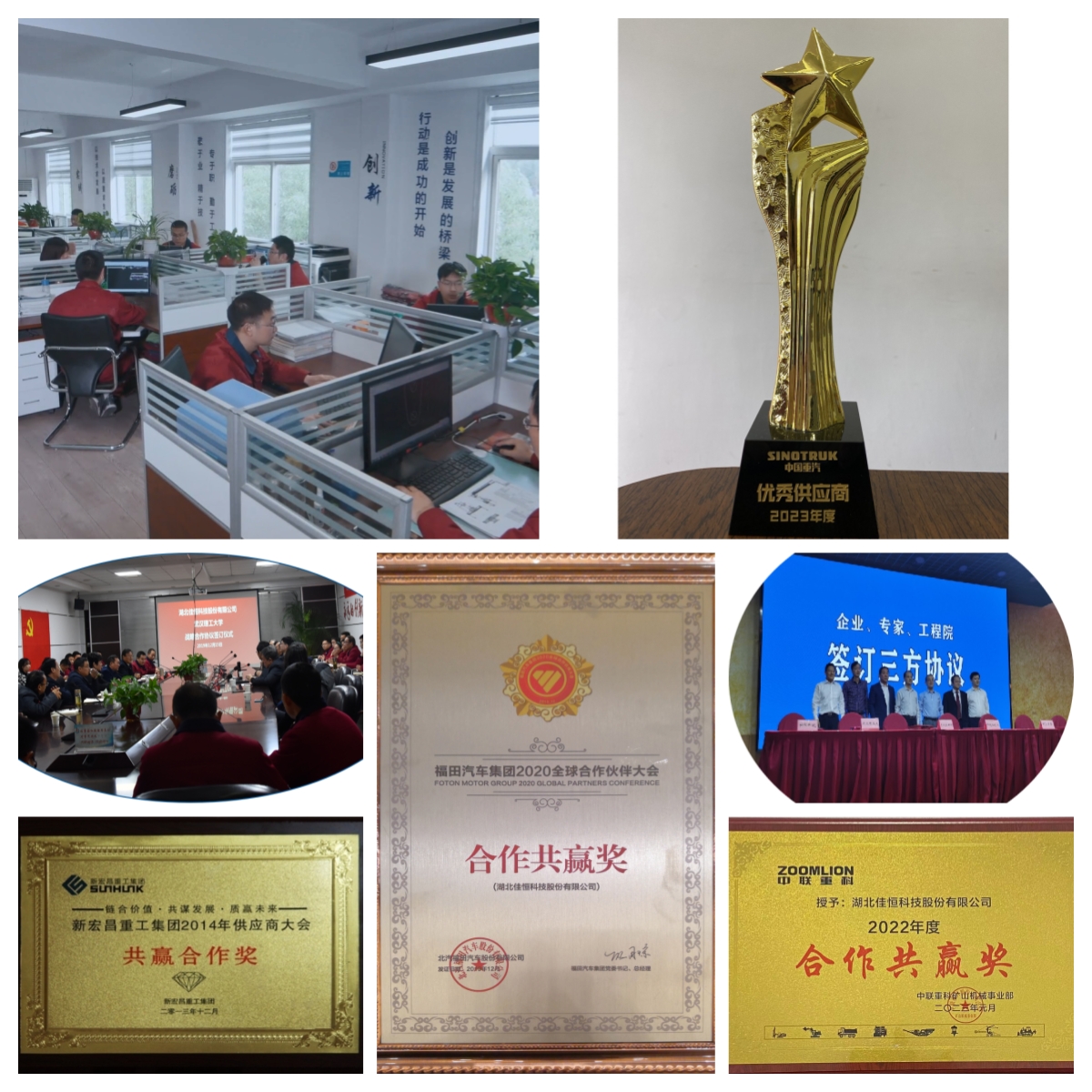
Why High-Pressure and Heavy-Load Cylinders Require Custom Engineering
A hydraulic cylinder converts fluid pressure into linear force. The basic relationship is:
Force = Pressure × Effective Piston Area
For example, a cylinder with a 200 mm bore has a piston area of approximately 31,416 mm². At 250 bar, the theoretical extension force is about 785 kN before considering friction, pressure losses, and design safety factors.
However, load capacity is not determined by bore size alone. Engineers must also evaluate:
- Operating pressure and peak or shock pressure
- Bore diameter and rod diameter
- Stroke length and retraction speed
- Buckling risk under compression
- Side loading and eccentric loads
- Mounting configuration
- Seal compatibility with the hydraulic fluid
- Temperature, corrosion, dust, and water exposure
- Fatigue cycles and duty cycle
- Available installation space
This is why Custom Made Hydraulic Cylinders are often more reliable than standard off-the-shelf cylinders for demanding equipment. A correctly engineered cylinder can deliver the required force while avoiding unnecessary weight, material cost, and installation problems.
The Industry Background Behind Custom Hydraulic Cylinders
Hydraulic power has been used in industrial machinery for more than a century, evolving from basic lifting systems into sophisticated electro-hydraulic equipment. Today, hydraulic cylinders are essential components in:
- Mobile cranes and aerial work platforms
- Excavators, loaders, and mining machinery
- Steel mills and foundries
- Injection molding and forging presses
- Waste compactors and recycling equipment
- Marine and offshore systems
- Agricultural machinery
- Dam gates and industrial automation systems
As equipment became more compact and powerful, standard cylinders could no longer meet every application requirement. Manufacturers began developing custom hydraulic actuator solutions with specialized rod coatings, integrated position sensors, high-temperature seals, oversized bearings, and application-specific mounting systems.
Jiaheng supports this engineering approach by treating the cylinder as part of the complete hydraulic system rather than as an isolated component. This is important because a high-pressure cylinder can still fail if the hose, valve, clevis, frame, or control system is incorrectly designed.
How Jiaheng Designs Cylinders for High Pressure and Heavy Loads
1. Define the Application Requirements
The design process begins with the actual operating conditions. Customers should provide, where possible:
- Required push and pull force
- Maximum working pressure and relief-valve setting
- Stroke and retracted length
- Load direction and mounting points
- Required operating speed
- Number of cycles or expected service life
- Hydraulic fluid and operating temperature
- Environmental exposure
- Available installation dimensions
- Required sensors, ports, and accessories
If the load is not centered on the rod axis, the cylinder may experience side loading. Side loading increases wear on the guide rings, rod seal, piston, and barrel. Jiaheng can therefore review mounting geometry and recommend spherical bearings, trunnion mounts, flange mounts, or guided mechanisms where necessary.
2. Calculate Bore, Rod Diameter, and Stability
The bore determines the theoretical hydraulic force, while the rod diameter affects retraction force and column strength.
For extension:
Fₑ = P × πD² / 4
For retraction:
Fᵣ = P × π(D² − d²) / 4
Where:
- F is theoretical force
- P is hydraulic pressure
- D is bore diameter
- d is rod diameter
For long-stroke cylinders under compression, engineers must also check Euler buckling and allowable slenderness. A cylinder that produces sufficient force may still be unsafe if the rod bends under load. In heavy-duty Custom Made Hydraulic Cylinders, rod diameter, unsupported length, end-fixing condition, and safety factor are therefore critical design variables.
3. Select Materials and Surface Treatments
Material selection depends on pressure, fatigue, corrosion, and operating environment. Typical choices include:
- Honed steel tube for the cylinder barrel
- Alloy steel for the piston rod
- Ductile iron or forged steel for end caps
- Bronze, composite, or engineered polymer guide rings
- Chrome-plated or corrosion-resistant rod surfaces
For abrasive or corrosive conditions, Jiaheng may evaluate hard chrome plating, nickel-chrome coatings, induction-hardened rods, stainless-steel components, or specialized anti-corrosion treatments.
The internal tube surface also matters. A precise honed finish supports seal performance and reduces leakage. Depending on the drawing and application, machining tolerances can be controlled to 0.01 mm on specified critical dimensions. The final tolerance should always be confirmed on the approved technical drawing because requirements vary by cylinder size and function.
4. Engineer the Sealing System
Seals must be selected according to pressure, temperature, speed, fluid type, and contamination level. Common sealing elements include:
- Rod seals
- Piston seals
- Wipers
- Static O-rings
- Wear rings
- Buffer seals
- Guide rings
For high-pressure applications, a buffer seal can help reduce pressure spikes reaching the primary rod seal. Seal material may include polyurethane, nitrile rubber, fluorocarbon rubber, PTFE, or other engineered compounds.
A common mistake is to choose seals only by nominal pressure. In practice, extrusion gaps, temperature, rod surface condition, fluid compatibility, and dynamic speed are equally important.
5. Validate Manufacturing and Testing
A professional supplier should use documented inspection and testing procedures. Depending on the project, Jiaheng’s quality plan may include:
- Dimensional inspection of critical components
- Material certificate review
- Surface roughness measurement
- Weld inspection
- Assembly inspection
- Seal and guide verification
- Pressure testing
- Leakage testing
- Functional cycling
- Visual and packaging inspection
For quality assurance, customers may request 100% inspection of finished cylinders and pressure testing of every unit. Hydraulic testing procedures should be defined in the purchase specification. Relevant references may include ISO 10100 for hydraulic fluid power cylinder acceptance testing, ISO 6020/2 or ISO 6022 for dimensional and pressure-related cylinder requirements, and DIN specifications where applicable.
Welded components may also require inspection methods based on applicable ASTM or ISO procedures, such as visual inspection, penetrant testing, magnetic-particle testing, or ultrasonic testing. The exact standard depends on the material, weld category, industry, and customer specification.
Common Misconceptions About High-Pressure Hydraulic Cylinders
“A larger bore always solves a heavy-load problem”
A larger bore increases force, but it also increases weight, oil consumption, installation space, and structural loads on the machine frame. The correct solution may combine bore optimization, a stronger rod, improved mounting, and a higher-pressure hydraulic circuit.
“The rated pressure is the same as the safe operating pressure”
These terms should not be confused:
- Working pressure: Normal continuous operating pressure
- Proof pressure: Pressure used during verification testing
- Burst pressure: Pressure at which structural failure may occur
A cylinder should not be operated continuously at its proof or burst pressure. The working pressure must be selected with appropriate design margins and consideration of pressure spikes.
“Hydraulic cylinders can handle any load if the pressure is high enough”
Hydraulic force is only one part of the system. A heavy load can cause rod buckling, clevis deformation, pin failure, frame distortion, or side-load damage. The cylinder and machine structure must be analyzed together.
“Leakage is always caused by poor seals”
Leakage can also result from:
- Rod scoring or excessive roughness
- Misalignment
- Contaminated hydraulic oil
- Incorrect seal installation
- Excessive pressure spikes
- Damaged barrel surfaces
- Insufficient rod support
Correct diagnosis is essential before replacing seals.
Practical Applications and Example Scenarios
Heavy-Duty Mining Equipment
A mining machine may require a long-stroke cylinder exposed to dust, vibration, shock loads, and continuous cycling. A suitable design could include an oversized rod, reinforced rod guide, contamination-resistant wiper, high-strength mounting eyes, and a protective coating.
In this case, the goal is not merely to increase pressure. The design must control bending, protect the sealing system, and maintain performance during repeated load changes.
Steel Mill or Foundry Machinery
Steel production equipment often combines high force with elevated ambient temperature and severe contamination. Custom Made Hydraulic Cylinders for this environment may require high-temperature seals, thermal protection, robust chrome plating, and specialized cooling or shielding arrangements.
The supplier should also define maintenance intervals and inspection points because heat and scale can shorten seal and rod life.
Mobile Crane or Lifting Platform
A crane cylinder must manage both static load and dynamic shock. Engineers typically examine:
- Rated load and overload conditions
- Extension stability
- Pin and bushing stress
- Rod buckling
- Pressure spikes caused by sudden movement
- Load-holding valve integration
A custom cylinder may include a position sensor, integrated counterbalance valve, or specially designed mounting to improve operational control.
Custom Hydraulic Cylinders Versus Standard Cylinders
| Design factor |
Standard cylinder |
Jiaheng custom hydraulic cylinder |
| Dimensions |
Fixed catalog sizes |
Bore, stroke, rod, and mounting engineered to drawing |
| Pressure capability |
Limited to catalog rating |
Designed around working and peak pressure |
| Mounting |
Standard clevis, flange, or foot |
Application-specific mounting and alignment |
| Load type |
Usually centered axial load |
Can be evaluated for side load and shock load |
| Seals |
Standard seal package |
Fluid, temperature, and pressure-specific sealing |
| Sensors |
Limited options |
Position sensors and custom ports available by design |
| Inspection |
Supplier’s standard plan |
Project-specific inspection and documentation |
| Serviceability |
General replacement |
Optimized for the machine’s maintenance requirements |
This does not mean every application needs a custom product. A standard cylinder is often appropriate for simple, low-risk machinery. Custom engineering becomes more valuable when the equipment has unusual dimensions, high cycle rates, heavy loads, aggressive environments, or costly downtime.
What Buyers Should Confirm Before Ordering
To reduce design revisions and delivery risk, customers should ask the manufacturer for:
- General arrangement drawing and 3D model
- Bore, rod diameter, stroke, and retracted length
- Working, proof, and maximum pressure
- Material and surface-treatment specifications
- Seal brand or material requirements
- Mounting and pin dimensions
- Port type, location, and thread standard
- Pressure-test requirements
- Inspection records and traceability
- Spare seal-kit availability
- Warranty and after-sales response
A responsive engineering supplier should clarify technical questions quickly. Jiaheng can provide a 24-hour response for technical inquiries, subject to project complexity and time-zone coverage. Customers should also request a formal drawing approval process before production begins.
Why Jiaheng Is a Practical Partner for Custom Cylinder Projects
Jiaheng’s value is not limited to producing a cylinder from a sketch. The more important capability is coordinating design, machining, welding, sealing, assembly, inspection, and documentation as one controlled process.
For demanding Custom Made Hydraulic Cylinders, buyers should prioritize:
- Application-based force and stability calculations
- Material and coating selection
- Controlled machining and honing
- Documented pressure testing
- 100% final inspection when required
- Traceable quality records
- Clear engineering communication
- Long-term spare-parts support
A reliable manufacturer should also explain design limitations honestly. If the machine has severe side loading or an unsafe mounting arrangement, increasing cylinder pressure is not an adequate solution. The correct approach may involve redesigning the linkage, adding guides, changing the rod diameter, or upgrading the hydraulic control circuit.
Final Answer: Can They Handle High Pressure or Heavy Loads?
Yes, Can custom hydraulic cylinders be designed to handle high pressure or heavy loads? Absolutely—but safe performance depends on complete engineering rather than pressure rating alone. Bore size, rod stability, mounting, fatigue, materials, seals, hydraulic contamination, pressure spikes, and machine structure must all be considered.
The best custom hydraulic actuator solutions are designed around the actual application, verified against recognized requirements such as ISO, DIN, and applicable ASTM procedures, and supported by documented testing. Whether the project involves mining, lifting, steel production, marine machinery, or industrial automation, Jiaheng can help evaluate the load, pressure, stroke, and environmental conditions before recommending the correct cylinder configuration.
When standard products create compromises, explore Custom Hydraulic Cylinders and request a technical review, drawing, inspection plan, and quotation from Jiaheng.