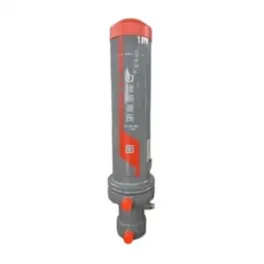
Replacement hydraulic cylinders are newly manufactured cylinders designed to replace worn, damaged, or outdated hydraulic cylinders in machinery and equipment. They perform the same function as the original cylinder - converting hydraulic fluid pressure into linear force and motion - but are built to meet or exceed OEM specifications for performance, durability, and safety. Replacement hydraulic cylinders are widely used in construction machinery, mining trucks, agricultural equipment, industrial systems, and other heavy-duty applications to restore equipment reliability and extend service life without the need for costly full equipment replacement.
Replacement Hydraulic Cylinders Advantages
Our hydraulic cylinder replacement parts offer significant advantages that ensure performance, reliability, and cost-effectiveness for our customers. Manufactured with high-grade materials and precision machining, our parts are designed to withstand heavy loads, high pressure, and harsh working conditions. Strict quality control guarantees excellent sealing, smooth operation, and extended service life, reducing downtime and maintenance costs. We provide a wide range of standard and custom components to fit different equipment models, ensuring quick replacement and compatibility. By combining durability, precision, and affordability, our hydraulic cylinder replacement parts deliver exceptional value and keep machinery running at peak efficiency.
Buy Now, Fast Delivery
Choose from a wide variety of hydraulic cylinder replacement parts, in stock, and we'll ship directly to you in a short time.
As a professional manufacturer of replacement hydraulic cylinders, we specialize in producing durable and high-performance solutions for a wide range of applications, including construction machinery, mining equipment, agricultural vehicles, and industrial systems. Our strengths include advanced design capabilities, precision manufacturing, and strict quality control processes that ensure every cylinder delivers reliable operation and long service life. With the ability to provide both standard models and customized cylinders, we meet diverse customer requirements while maintaining competitive pricing and fast delivery. Our commitment to innovation and customer satisfaction has made us a trusted source for replacement hydraulic cylinders worldwide.
We offer both standard and custom hydraulic cylinder replacement parts. Regardless of your hydraulic cylinder needs, we can assist you.
FAQ
What are the core parameters that must be provided when purchasing hydraulic cylinders?
Cylinder bore (cylinder diameter), piston rod outer diameter (rod diameter) Maximum working pressure, rated pressure Installation distance/stroke, total extension length, total retraction length Mounting type: clevis/flange/hinge/ball joint/trunnion Inlet/outlet port specifications, port location (top/side/bottom) Operating conditions: Lifting/truck-mounted crane/construction machinery/sanitation/ Additional requirements: Buffering, dustproof, low and high temperature resistance, corrosion resistance, multi-stage telescopic design
How to determine the required cylinder diameter to meet the lifting weight?
Thrust formula: Thrust F = Pressure P × Piston area S Rodless chamber thrust (extension): F = P × π × (D/2)² Rod chamber pull force (retraction): F = P × π × [(D/2)² - (d/2)²] When purchasing, inform the manufacturer of the equipment's maximum load and system hydraulic pressure; the manufacturer can directly match the cylinder diameter and rod diameter.
How to choose between single-acting and double-acting hydraulic cylinders?
Single-acting: Only one chamber is filled with oil for extension, and it retracts by its own weight/load; simple structure, low cost; suitable for dump truck outriggers and small lifting platforms.
Double-acting: Two chambers are supplied with oil separately, and both extension and retraction are hydraulically driven; thrust and pull are controllable, and speed is stable; the mainstream model for truck-mounted cranes, aerial work platforms, and construction machinery.
What are the differences in commonly used materials for cylinder barrels and piston rods?
Cylinder Barrel: 20#/45# seamless honed tubing (general purpose); 304 stainless steel (corrosion-resistant in water environments)
Piston Rod: 45# tempered chrome plating (standard); 40Cr/35CrMo for heavy-duty construction machinery; stainless steel rod (seawater, corrosive environmental environments)
Chrome Plating Thickness: Standard 0.05–0.08mm, Heavy-duty 0.10–0.15mm, wear-resistant and rust-proof
How to customize hydraulic cylinders for high/low temperature/seawater environments?
High temperature (>80℃): Fluororubber FKM seals, high-temperature resistant hydraulic oil, thickened dustproof coating.
Low temperature (below -20℃): Low-temperature dedicated PU seals, low-pour-point hydraulic oil.
Sewage/seawater corrosion protection: Stainless steel piston rods, stainless steel cylinder barrels, rust-proof electrophoretic coating, anti-corrosion and dustproof rings.
What are the common hydraulic cylinder mounting types and their applicable scenarios?
Front/Rear Earring: Truck-mounted cranes, hoists, general lifting equipment, allowing for slight swaying.
Intermediate Trunnion: Multi-stage cylinders in dump trucks, ensuring even force distribution.
Flange Mounting (Front/Rear Flange): Machine tools, fixed equipment, high rigidity with no swaying.
Ball Joint Hinge: For large angle changes, avoiding jamming, used in obstacle clearing and special machinery.
Can you customize hydraulic cylinders to non-standard specifications? What is the lead time?
We support all non-standard options: special stroke, irregularly shaped mounting bases, extended lugs, side-mounted oil ports, magnetic switches, and synchronized hydraulic cylinders.
Standard in-stock cylinders: 3–7 days shipping
Regular non-standard cylinders: 15–30 days
Large, heavy-duty, multi-stage/stainless steel corrosion-resistant custom cylinders: 30–60 days
What is a synchronizing cylinder, and which equipment requires it?
Dual-cylinder synchronous lifting ensures consistent lifting height on both sides; aerial work platforms, scissor lifts, large outriggers, and lifting platforms are equipped with internal synchronizing structures or flow divider valves.
Why are there such large price differences for the same hydraulic cylinder from different manufacturers? What accounts for these price differences?
Core sources of price differences:
Tubing: Ordinary honed tubing vs. high-precision seamless thickened tubing
Piston rod: Thin chrome-plated vs. thick chrome alloy steel rod
Seal: Domestic ordinary seals vs. NOK imported seals
Process: Includes or excludes cushioning, heat treatment, and the thickness of the anti-rust coating
Accessories: Whether the lugs and hinge seats are thickened, and the welding process.
What is the minimum order quantity? Can I buy a single unit?
Standard in-stock hydraulic cylinders can be sold individually; some manufacturers have MOQs for large, non-standard multi-stage hydraulic cylinders.
Payment terms, invoices, and delivery methods?
Standard: 30% deposit in advance, balance upon shipment; in-stock items, payment upon delivery; wooden crate packaging; delivery methods include EXW/FOB/CIF, etc.
How long is the warranty for hydraulic cylinders? What situations are not covered by the warranty?
Standard Warranty: 6-12 months for standard cylinders, 12 months for heavy-duty construction machinery cylinders;
Exclusions: Deformation due to human impact, overpressure use, modified cylinders, seal damage caused by oil contamination, dry running due to insufficient oil, severe corrosion without customized anti-corrosion measures.
Which hydraulic cylinder standards are commonly used by customers in Europe, America, and Southeast Asia?
Southeast Asia and the Middle East primarily use British Standard (G) threads; the Americas market uses NPT threads; Europe commonly uses metric threads and CE standard hydraulic cylinders.