## Understanding the Single-Stage Hydraulic Cylinder for Industrial Machinery
Single-stage hydraulic cylinders are pivotal components in various industrial machinery, serving as vital actuators that convert hydraulic energy into linear motion. These cylinders operate based on Pascal's principle, which states that a change in pressure applied to an incompressible fluid in a closed system is transmitted undiminished throughout the fluid.
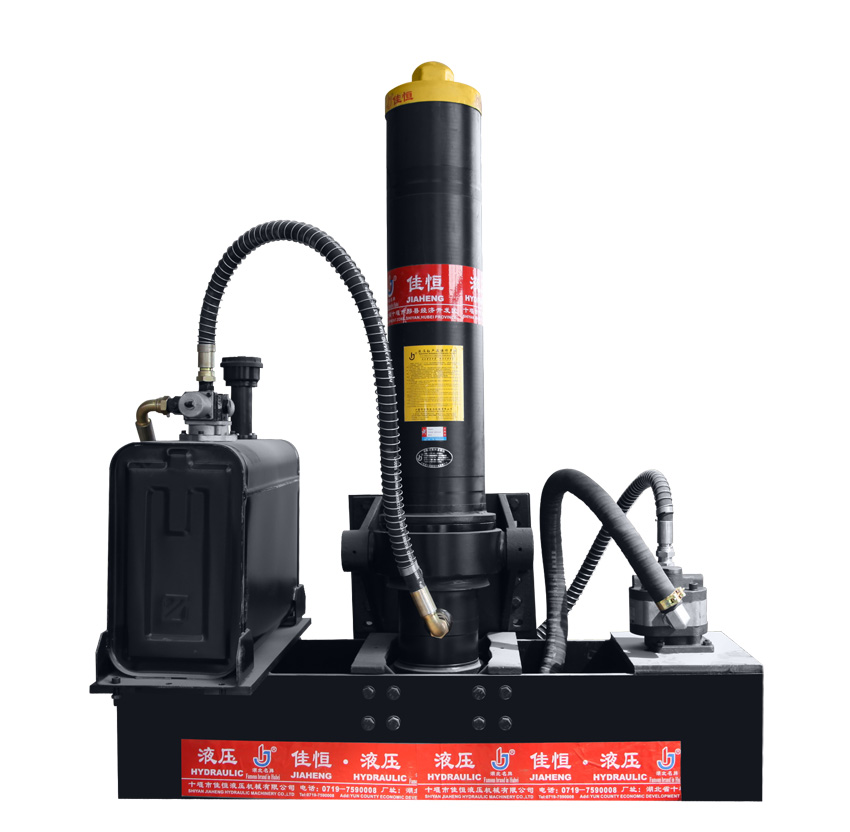
At the core of a single-stage hydraulic cylinder are several key components: the cylinder barrel, piston, rod, seals, and ports. The cylinder barrel houses the hydraulic fluid and provides the structure for the piston to move. The piston, attached to the rod, moves in response to the pressure of hydraulic fluid entering the cylinder through the inlet port. Seals are critical for preventing fluid leakage, ensuring that pressure is maintained for effective operation. The ports serve as the exchange lines for fluid entering and exiting the cylinder, influencing the movement and speed of the piston.
When hydraulic fluid is pumped into the cylinder, it fills the chamber behind the piston. This fluid creates pressure, which pushes the piston forward. The movement of the piston translates into linear motion of the rod, making it suitable for various tasks, such as lifting heavy loads, pushing components into position, or clamping parts for machining. The return of the piston is facilitated by the fluid exiting the cylinder through the outlet port, often aided by a return spring or gravity, depending on the application.
Advanced technology has significantly enhanced the efficiency and reliability of single-stage hydraulic cylinders. Modern manufacturing utilizes sensors and electronic controls that allow for precise regulation of fluid flow and pressure. This integration of technology ensures smoother operations, reduces the risk of mechanical failure, and enhances overall productivity. For instance, in an automotive assembly line, hydraulic cylinders are used for precise and efficient positioning of components, which ensures high-quality assembly and reduces cycle times.
In summary, the single-stage hydraulic cylinder plays an essential role in modern manufacturing, enabling efficient production processes by providing reliable and powerful linear motion. Its application spans across various industries, including automotive, aerospace, and construction. As technology continues to advance, the functionality and efficiency of these cylinders will only improve, cementing their importance in the field of industrial machinery. If you are looking for quality suppliers of hydraulic cylinders or have any queries, feel free to contact us.


 Technical & Specification-Focused Keywords